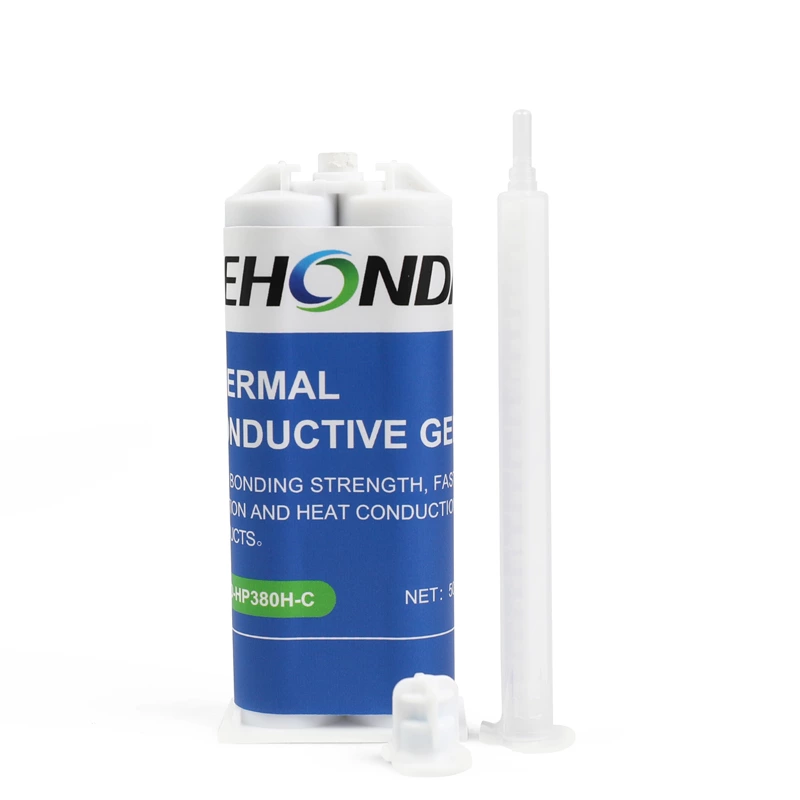
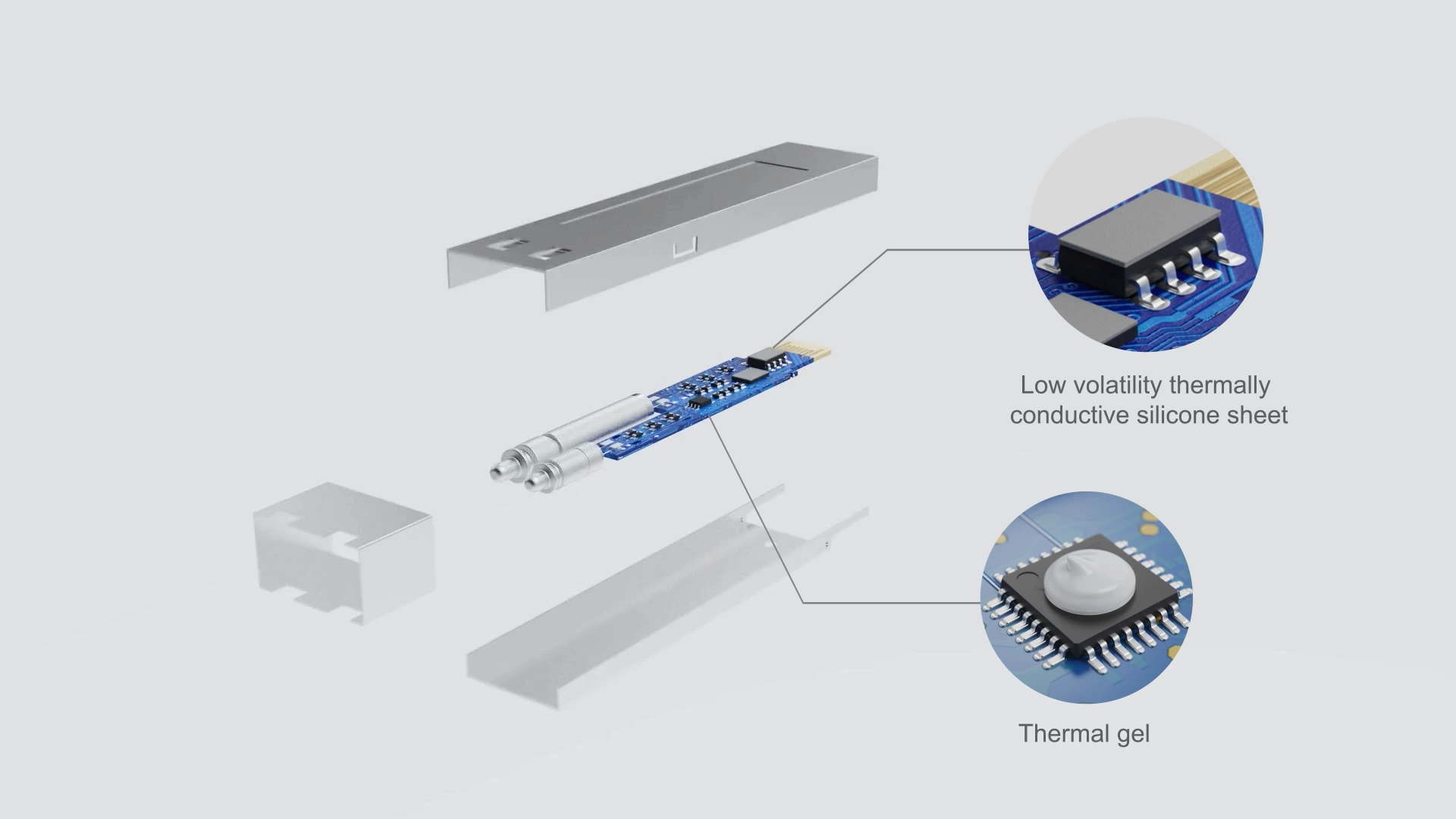
With the accelerated construction of 5G networks, the use of optical fibers is becoming more frequent.The optical module is the core device of the optical communication system, which plays a key role in realizing the efficient transmission of data.Fehonda conductive adhesive has good shielding effect to protect sensitive components.FEHONDA Thermally conductive material optimizes performance through efficient thermal management.FEHONDA Low volatility thermal conductive silicone sheet has the characteristics of low oil leakage rate and low volatility, which can reduce the internal pollution of the device.The optical module will increase the working temperature during data transmission.FEHONDA thermally conductive materials use thermally conductive gels, thermally conductive silicone sheets, etc. to achieve rapid heat dissipation on optical devices to improve performance.
Optical module solution
FEHONDA | Thermal Solution
Optical Module Thermal Solution
In a sealed optical module, heat shifts the wavelength and volatiles fog the lens — both are material decisions
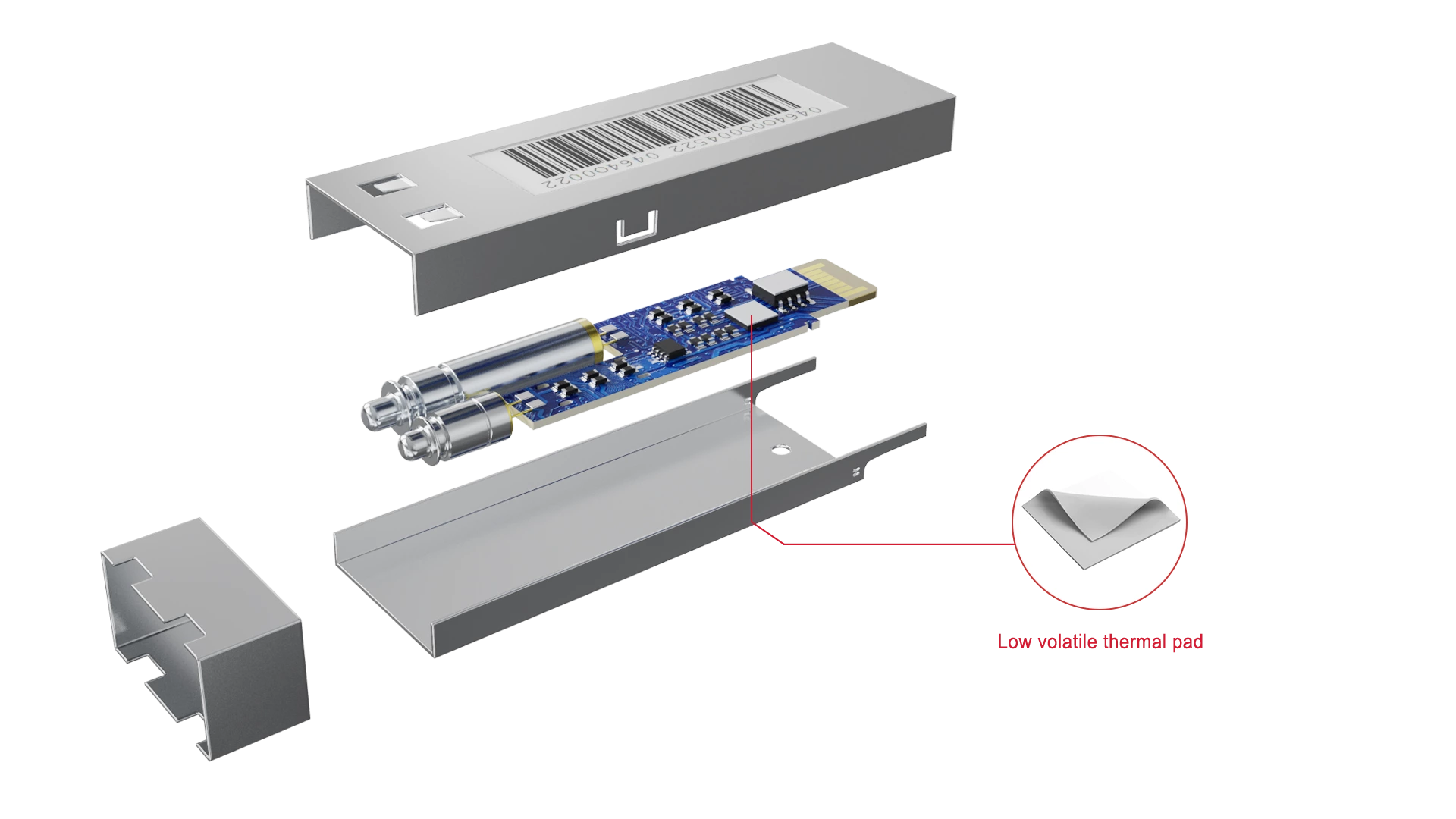
FEHONDA Low volatility thermal conductive silicone sheet has the characteristics of low oil leakage rate and low volatility, which can reduce the internal pollution of the device.
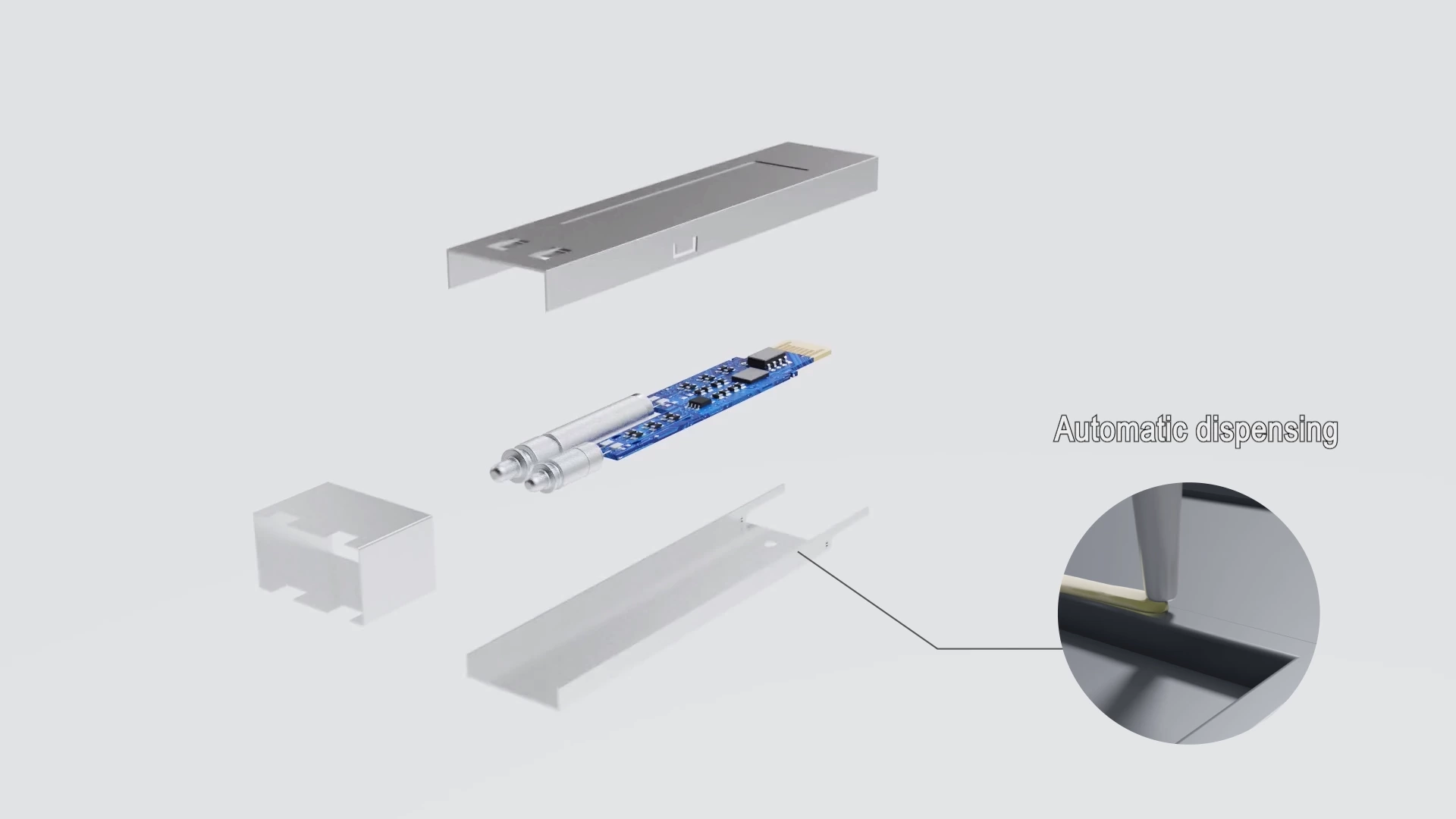
Fehonda conductive adhesive has good shielding effect to protect sensitive components.
Optical Modules
As a semiconductor optoelectronic device, an optical transceiver is the core component of any optical communication system: it converts electrical data into light and back again, and it is what makes high-speed transmission possible. The rollout of 5G front-haul, cloud data centres and AI compute clusters has made it one of the most densely packed electronics assemblies in production. Pluggable form factors such as QSFP-DD and OSFP put lasers, detectors, modulators, drivers, a transimpedance amplifier and a DSP into a housing measured in millimetres, and that housing has to be inserted and removed by hand.
As line rates have moved from 100G to 400G, 800G and beyond, the power envelope has grown faster than the available space. An 800G pluggable transceiver commonly dissipates roughly 15 to 20 W, and a fully populated 48-port switch can be rejecting more than 700 W through its transceiver bank alone. Meanwhile the industry keeps the module case within a defined temperature limit — commonly 70 °C under SFF-8431 and SFF-8636 — with thermal shutdown above roughly 85 °C. The gap between how much heat is generated and how little room there is to move it is the central thermal problem.
Solution
To address the thermal management problem in optical modules, the material has to suit both the mechanical stack and the optical environment. As line rates rise and packages shrink, several heat sources with different heights sit under one shield, the module must remain pluggable and serviceable, and the optical cavity must stay clean. FEHONDA therefore recommends low volatility thermal pads, thermally conductive gels and greases, thermally conductive silicone rubber, conductive adhesive for EMI shielding, and thermally conductive potting compounds — each selected for the position it serves, to reduce interface thermal resistance and extend service life.
| Position | Recommended material | Grades | Why this position |
| DSP, laser and driver to the housing | Low volatility thermal pad | 1.5–6.0 W/(m·K) | Controlled thickness inside a tight housing, with the volatile constraint met |
| Uneven component heights under one shield | Thermally conductive gel | 1.5–6.0 W/(m·K) | Fills a variable gap at low assembly pressure; suitable for automated dispensing |
| Thinnest possible bond line | Thermal grease | 1.5–6.0 W/(m·K) | Wets the micro-voids of the mating surfaces for the lowest interface resistance |
| Small parts needing a heat path and retention | Thermally conductive silicone rubber (RTV) | 1.0–3.0 W/(m·K) | Room temperature cure, bonding and conduction in one step |
| Housing seams and shield can joints | Conductive adhesive for EMI shielding | — | Continuous grounding path around the sensitive receiver stage |
| Driver or power sub-assembly | Thermally conductive potting compound | 1.5–6.0 W/(m·K) | Protection from vibration, moisture and dust where a full fill is acceptable |
Thermal Pad
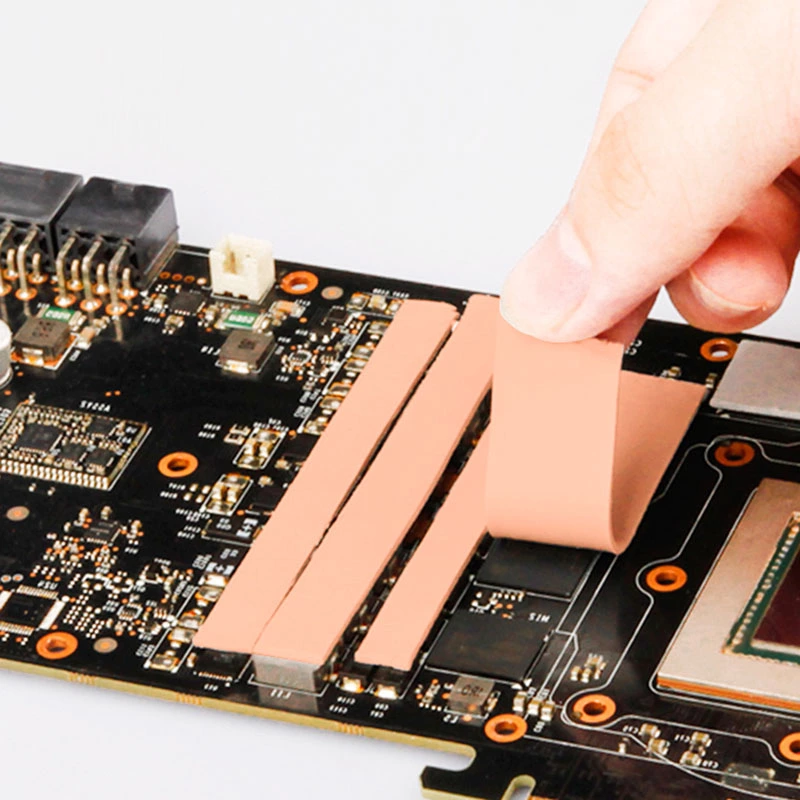
Thermal pad has good thermal conductivity and conformability, and it transfers the heat generated by the laser, DSP and driver quickly to the module housing. As a connecting medium it fills the gaps between the component and the case, improving conduction efficiency and keeping the devices within their operating window. For optical modules the low volatility, low oil leakage grade should be the default: the pad sits directly on the hottest parts and is therefore the most likely source of vapour. For different package outlines and heights, FEHONDA can supply custom die-cut thermal pads to the drawing, including the mounting cut-outs and tight tolerances that a pluggable assembly requires.
Features and Advantages
- Low oil leakage rate and low volatile content, reducing internal contamination of the optical cavity.
- Good conformability that replaces air gaps without high assembly pressure, which matters for pluggable housings.
- Factory-controlled thickness, so the bond line is repeatable across a production run.
- Available across 1.5 to 6.0 W/(m·K) and custom die-cut to the customer drawing.
- Electrically insulating ceramic-filled grades available where the interface is also a voltage barrier.
Thermal Gel
Thermally conductive gel is a soft, highly conformable material used where components sit at different heights under one shield can. A pre-cut pad bridges the gap it was cut for; a gel fills whatever gap is actually there. It can be dispensed automatically in a controlled volume, which suits high-volume module assembly, and its low modulus puts very little stress on delicate packages during compression. In optical modules it should be specified with the same volatile requirement as the pad, since it is also applied directly to hot components.
Features and Advantages
- Fills variable and uneven gaps without requiring a flat mating surface.
- Low assembly pressure and low stress on fragile optical and semiconductor packages.
- Suitable for automated dispensing with controlled volume and repeatable coverage.
- Available across 1.5 to 6.0 W/(m·K); low volatility grades can be supplied on request.
Thermal Grease
Thermal grease has excellent thermal conductivity, good spreading behaviour and electrical insulation, and it transfers heat quickly from the device to achieve tight temperature control. Because it has low viscosity and good application performance, it can be placed on the heating device by dispensing or printing. It produces the thinnest bond line of the three interface formats, which is valuable where the height budget is tightest. The trade-off is process control: in a small sealed module, excess material can migrate onto connectors, so the dispense volume and the long-term resistance to pump-out should both be validated.
Features and Advantages
- Lowest interface resistance of the three formats, through a very thin bond line.
- Wets the micro-voids in machined surfaces rather than bridging over them.
- Electrically insulating and applicable by dispensing or screen printing.
- Available across 1.5 to 6.0 W/(m·K).
Thermally Conductive Silicone Rubber
Thermally conductive silicone rubber is a single-component, heat-conductive viscous material that cures at room temperature. In other words it is a paste-like silicone sealant resistant to stretching, vibration and impact, and it is widely used where small or uneven components need both filling and fixing. It transfers the heat of the working board to the module housing while holding the part in place, which removes the need for a separate clip. Because it is a silicone system, the volatile grade should be confirmed before it is used inside the optical cavity.
Features and Advantages
- Room temperature cure — no elevated temperature process that could disturb the optical alignment.
- Combines a heat path with mechanical retention, reducing part count.
- Resistant to vibration and impact, relevant to modules that are repeatedly inserted and removed.
- Fills uneven and small-sized components where a cut pad cannot be placed.
Conductive Adhesive for EMI Shielding
An optical module contains one of the most sensitive analogue circuits in the system: the receiver's transimpedance amplifier works with extremely small photocurrents, and it sits beside a high-speed DSP and a laser driver. FEHONDA conductive adhesive provides effective shielding to protect these sensitive components. Applied at housing seams, screw holes and shield can joints, it closes the gaps that a metal shell cannot weld shut, establishing a continuous grounding path so the enclosure stays an equipotential whole. That limits both high-frequency leakage out of the module and interference entering it, and it reduces the risk of ESD damage from charge accumulation. Some conductive adhesives also assist with heat transfer to the housing.
Features and Advantages
- Continuous grounding and equipotential bonding across housing seams and non-welded joints.
- Protects the high-impedance receiver stage from EMI and ESD.
- Elastic enough to absorb vibration and tolerate housing tolerance, unlike a rigid gasket.
- Dispensable in narrow beads without tooling, which suits fast prototyping and small batches.
- Compression ratio should be validated for the joint design — insufficient compression sharply reduces shielding performance.
Thermally Conductive Potting Adhesive
Thermally conductive potting adhesive is a two-component material with excellent electrical performance. It does not corrode components and adheres well to metals such as steel, aluminium, copper and tin, as well as to rubber, plastic, PET, PVC and PC. It is used to fix wires and circuit boards so that electronic components are protected from vibration, corrosion, moisture and dust, extending the service life of the assembly.
One boundary is worth stating clearly for this application: a pluggable optical module is a serviceable, optically sensitive assembly, so full potting of the optical cavity is generally not the right answer. It would trap volatiles near the lens, make rework impossible, and add weight to a part that is handled by hand. FEHONDA recommends potting for the external driver or power sub-assembly, or where a customer has explicitly designed for a fully filled, non-serviceable unit. If your design needs a full fill, we will ask about the optical surfaces and the volatile specification before quoting.
Features and Advantages
- Two-component cure with good electrical insulation and no corrosion of components.
- Strong adhesion to metals and common plastics used in housings and boards.
- Protects against vibration, moisture, dust and corrosion in the power sub-assembly.
- Thermally conductive grades available across 1.5 to 6.0 W/(m·K).
- Silicone chemistry for wide temperature swings; epoxy where rigidity and maximum conductivity are required.
Summary
Applying thermal conductive materials between the heat sources inside an optical module and its housing improves conduction efficiency, prevents local overheating, and helps maintain stable wavelength, output power and receiver sensitivity over the service life. Selecting a low volatility grade at the same time protects the optical path from the contamination that only appears after hundreds of hours in the field. FEHONDA supplies the pads, gels, greases, silicone rubber, conductive shielding adhesive and potting compounds for those positions, and can die-cut, formulate and package them to your drawing.
If you have questions about the application of thermal pads, thermal grease, thermally conductive silicone rubber, low volatility grades or shielding adhesives in optical modules, please contact the FEHONDA team for detailed information.
Please submit your request via our custom service form to ensure a faster response.