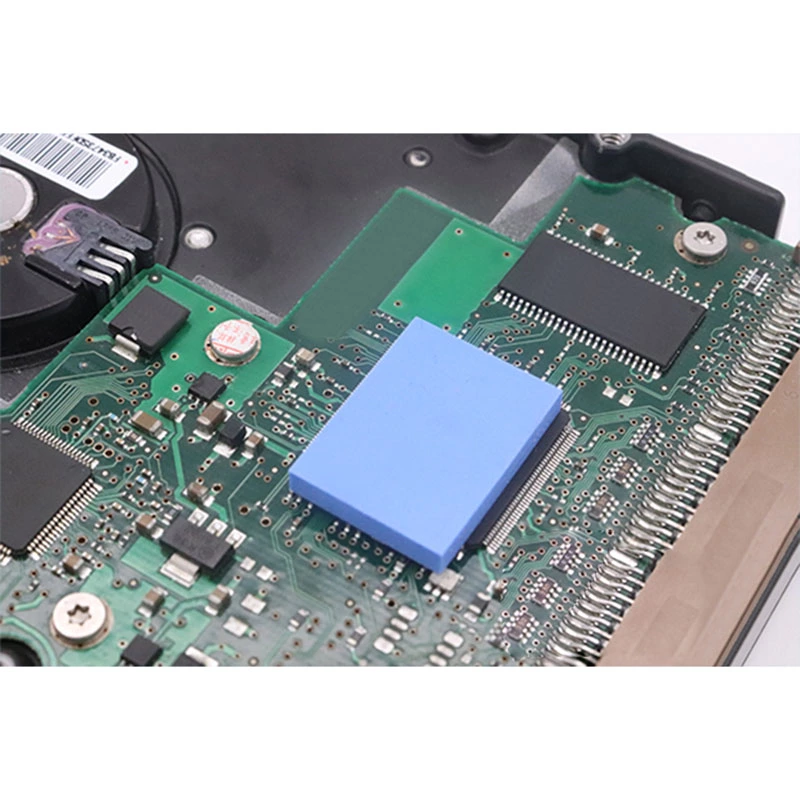
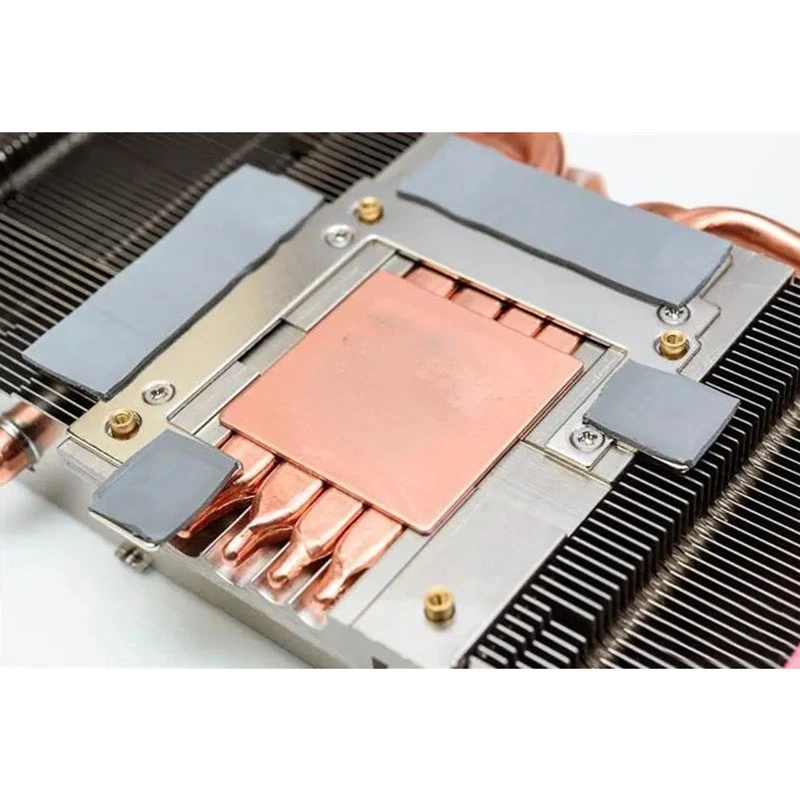
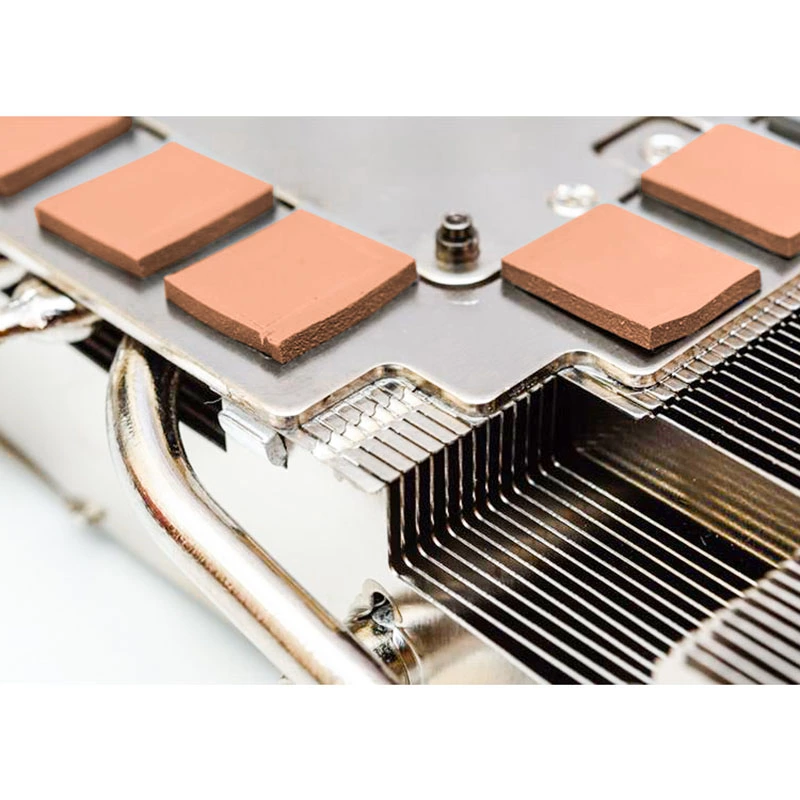
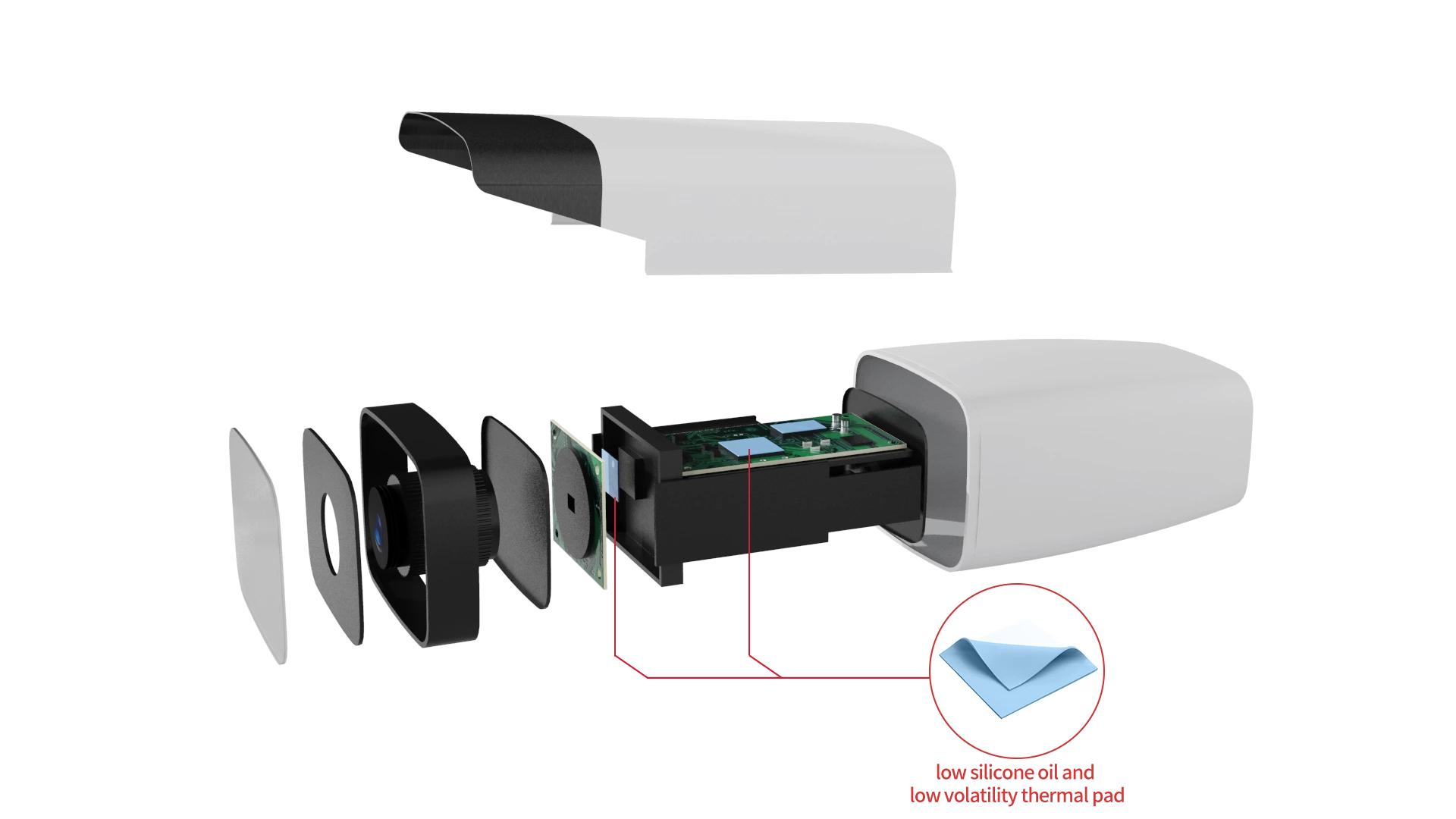
Surveillance cameras are constantly generating heat as they work, which gradually increases their internal temperature. In order to ensure the stable operation of the surveillance camera,We can add FEHONDA low silicone oil and low volatility thermal pad to the image processing chip and the back cover to assist in heat dissipation. Its' low oil leakage and low volatilization characteristics can avoid pollution to the photosensitive module. We can coat the circuit board with Conformal coating to protect it from waterproof and temperature resistance. A FEHONDA heat-conducting silicone sheet is also added between the heating element on the power supply PCB board and the shell to help dissipate heat. In order to improve its stability, the circuit board can be coated with Conformal coating for waterproof and moisture-proof protection.
Contact us to request a specification sheet and a free sample.
Security Monitoring Solutions
FEHONDA | Thermal Materials Technical Article
Thermal Materials for Security Monitoring Cameras
Why heat ruins the picture before it kills the camera, and why the pad you choose must not fog the lens
1. Heat ruins the picture before it kills the camera
This is the point that should shape the whole thermal budget, and it is usually the one that is left out of the specification.
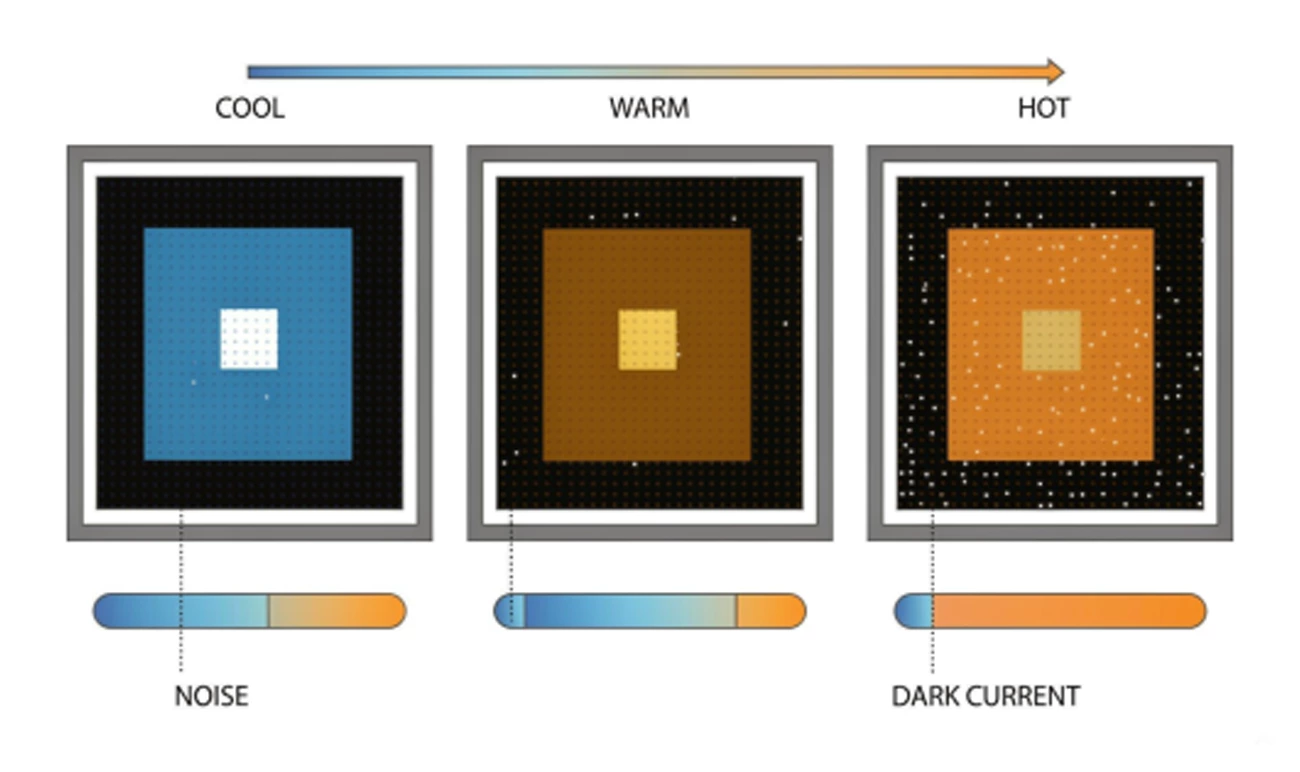
Every pixel in a CMOS or CCD sensor produces a small current even in total darkness, because thermal agitation frees electrons in the silicon whether or not any light arrives. That is dark current, and it is indistinguishable from signal: it fills the pixel's charge capacity, raises the noise floor, and shows up as bright specks and fixed-pattern noise in the image.
Dark current rises exponentially with temperature. The figure used across sensor engineering is that it doubles for roughly every 6 to 8 °C rise in sensor temperature.
2. FEHONDA materials for surveillance cameras
FEHONDA supplies thermally conductive pads, gels, silica, potting compounds, composite TIM constructions and conformal coatings for security monitoring equipment, with thermal conductivity grades spanning 1.5 to 6.0 W/(m·K). The table maps the range to camera positions.
| Product | Conductivity | Where it goes in a camera | Why it is chosen there |
| Low silicone oil, low volatility thermal pad | 1.5–6.0 W/(m·K) | Between the image processing chip and the back cover or housing | Carries processor heat into the housing while minimising outgassing. This is the specification that protects the photosensitive module — low oil bleed and low volatilisation mean nothing reaches the lens or sensor |
| Thermally conductive silicone sheet | 1.5–6.0 W/(m·K) | Between the heating elements on the power supply board and the housing shell | Gives the PoE regulation stage a path into the shell, which is the only sink available in a sealed enclosure |
| Thermally conductive gel | 1.5–6.0 W/(m·K) | Around mixed-height components and into irregular gaps between board and housing | Dispensable, so it fills variable geometry without a fixed thickness, and suits automated production |
| Thermally conductive silica (RTV adhesive) | 1.5–3.0 W/(m·K) | Bonding heat-generating parts to the housing or an internal spreader | Combines a heat path with mechanical retention, useful where the assembly sees continuous thermal cycling and outdoor vibration |
3. Working with FEHONDA
FEHONDA supplies thermally conductive pads, gels, silica, potting compounds, composite TIM constructions and conformal coatings for surveillance and security monitoring equipment, with thermal conductivity grades spanning 1.5 to 6.0 W/(m·K).
Our sales and engineering support teams help with grade selection against your housing layout, low-outgassing specification for optical cavities, dispensing and compression trials, coating selection, compliance documentation, custom die-cutting, OEM packaging and product customisation. Send us your housing drawing, the gap range at each position, your IR and AI thermal load, and your production volume, and we will return a shortlist, sample recommendations and lead time. Please submit your request via our custom service form to ensure a faster response.
📩 Contact our technical team: sales@fehonda.com
4. Why choose FEHONDA
- Materials specified for optics, not only for heat. Our low silicone oil, low volatility thermal pads are selected where the thermal path shares a sealed air space with the lens and the sensor. We treat outgassing as a specification alongside conductivity, because that is what keeps the image clean two years after installation.
- A grade for every position in the camera. From 1.5 to 6.0 W/(m·K), covering the image processor, the power board, the sensor assembly and the housing interface. We will not sell a top grade for a position where a softer, more conformable material gives lower interface resistance into the shell.
- Heat and moisture protection from one supplier. A camera needs a conduction path to the housing and a board that survives humidity and condensation cycles. Supplying the interface material and the conformal coating together avoids the compatibility problems that appear when the two are specified separately and validated late.
- Dispensable materials for volume production. Surveillance equipment is built in volume. Our gels are formulated for automated dispensing, giving consistent deposit volume and clean cut-off, so a dispensed thermal path is repeatable from unit to unit.
- Customisation and documentation. Die-cut parts to your drawing, thickness and hardness matched to your measured gap, colour coding for line error-proofing, OEM and private-label packaging, and RoHS and REACH declarations with supporting test reports. Send us the housing drawing and gap range and we will return a shortlist rather than a catalogue.