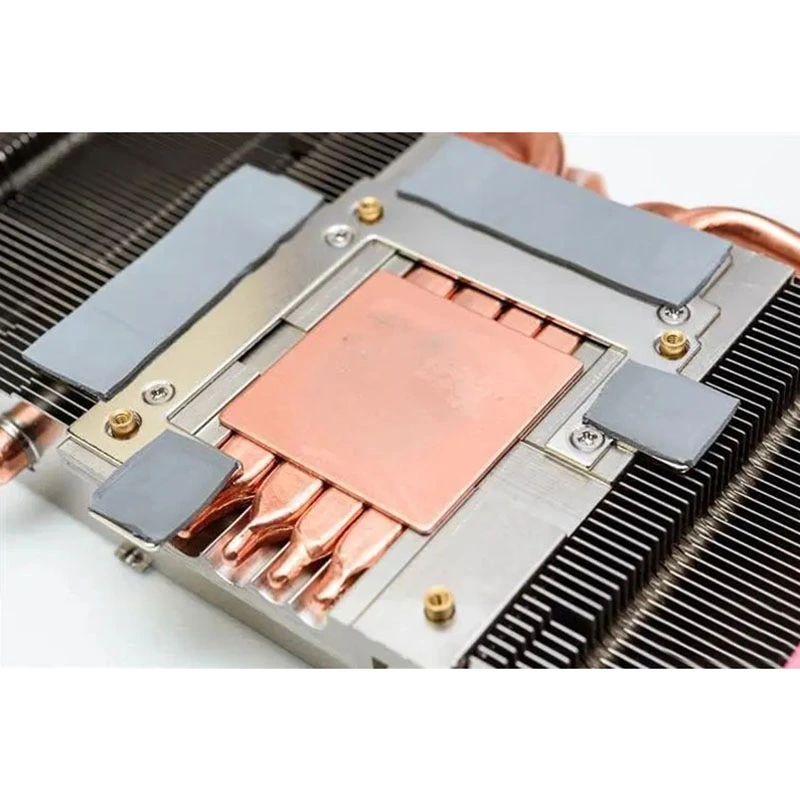
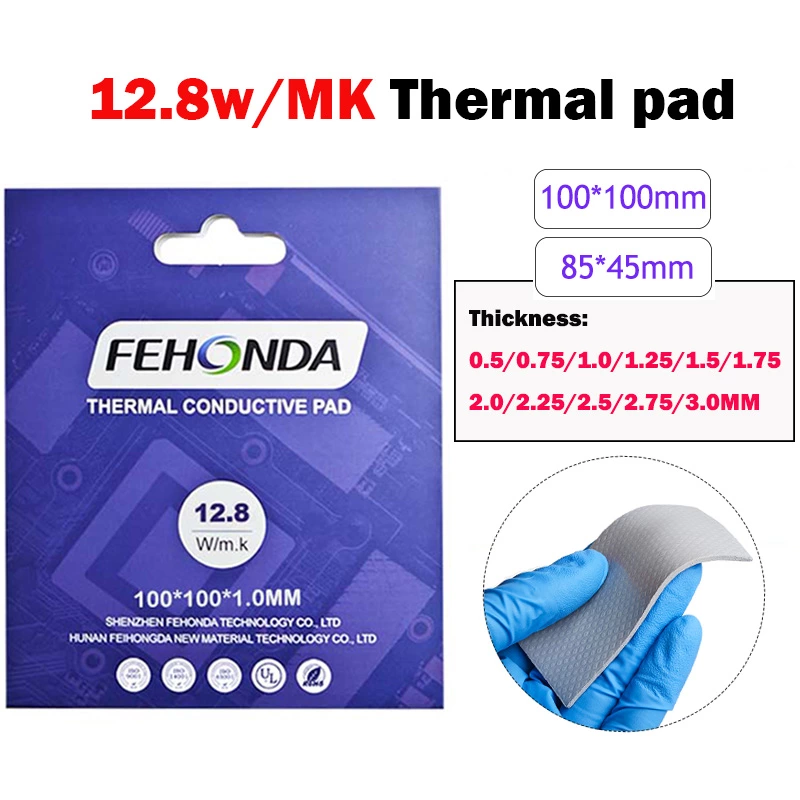
LP10 Mirocapsule Liquid Metal Thermal Paste
Features and Benefits
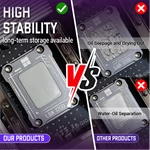
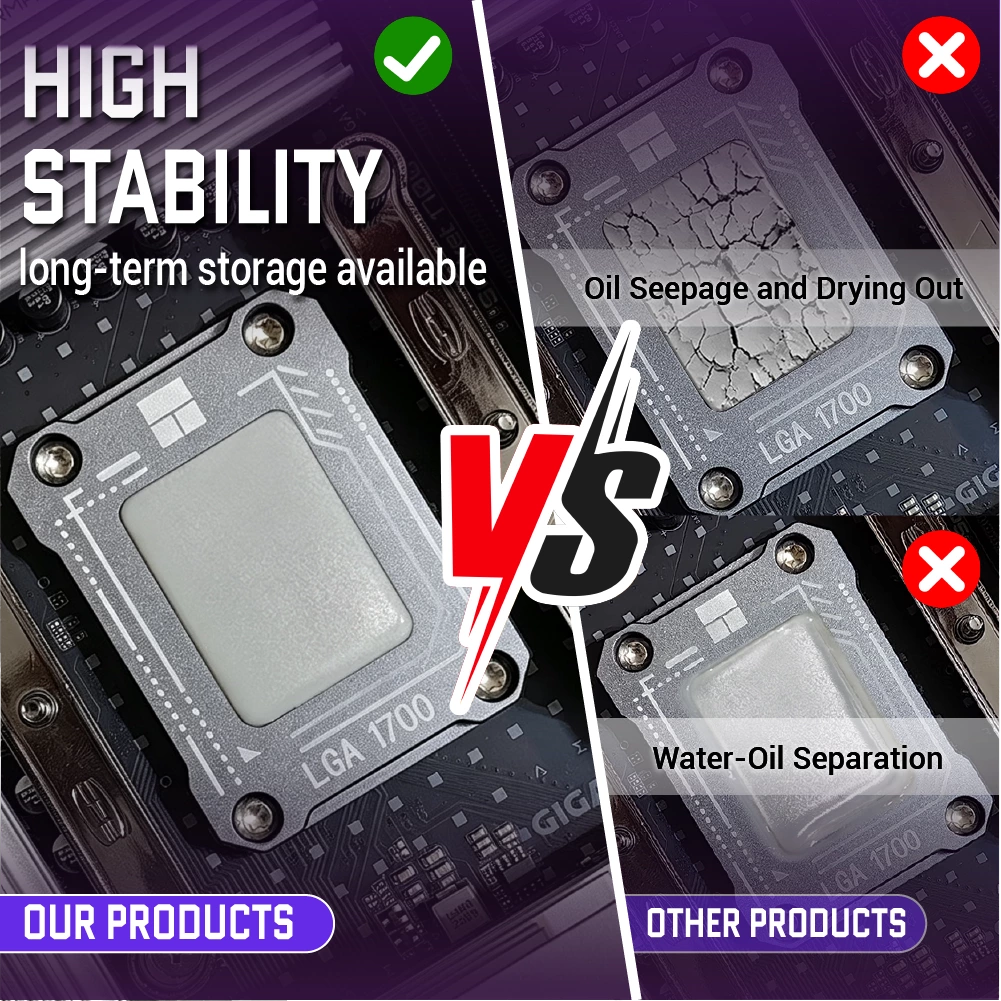
- Long-lasting and stable: Resists drying out, cracking, and oil separation (pump-out) even under prolonged high temperatures, eliminating the need for frequent maintenance;
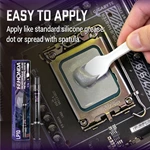
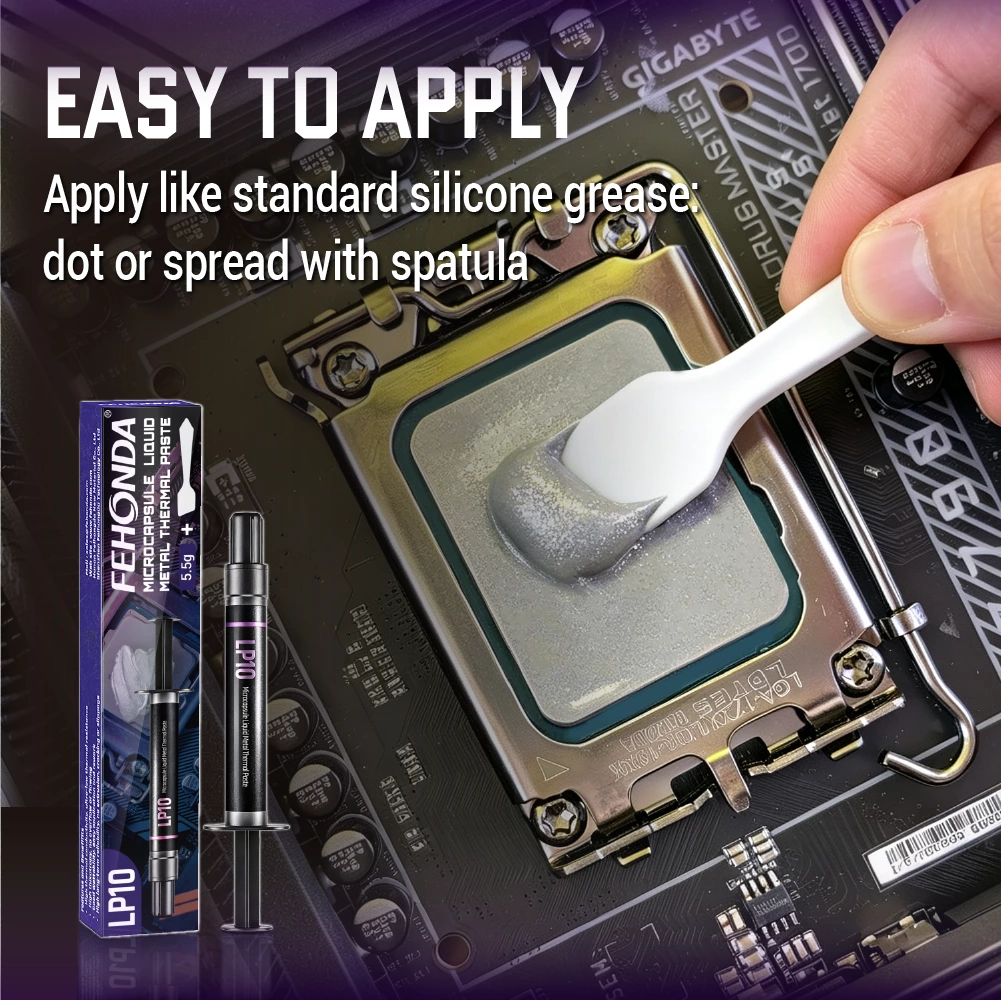
- Easy to apply: Low viscosity for easy application; forms an extremely thin interface layer; easy to clean with no residue;
- Safety certifications: ISO 9001 / ISO 14001 / RoHS / CE / UL; UL 94 V-0 flame retardant;
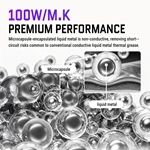
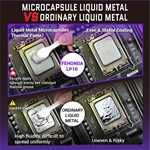
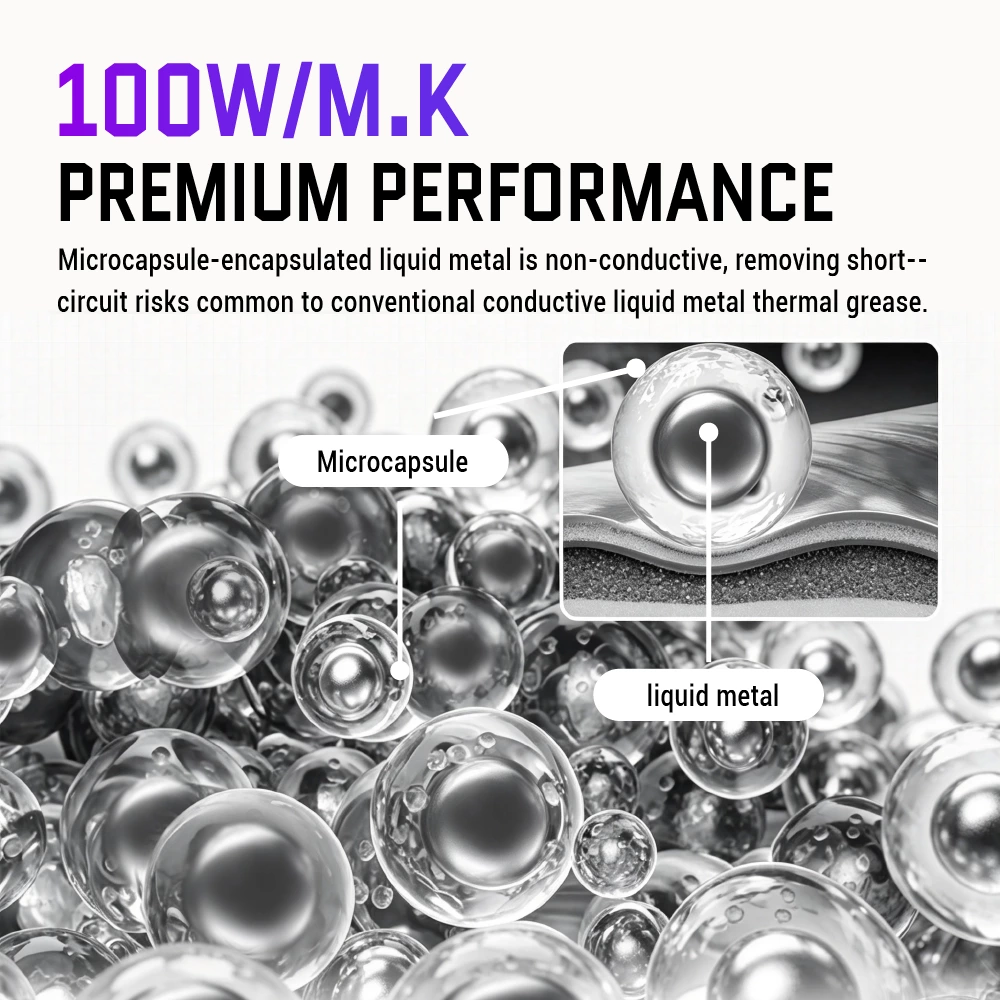
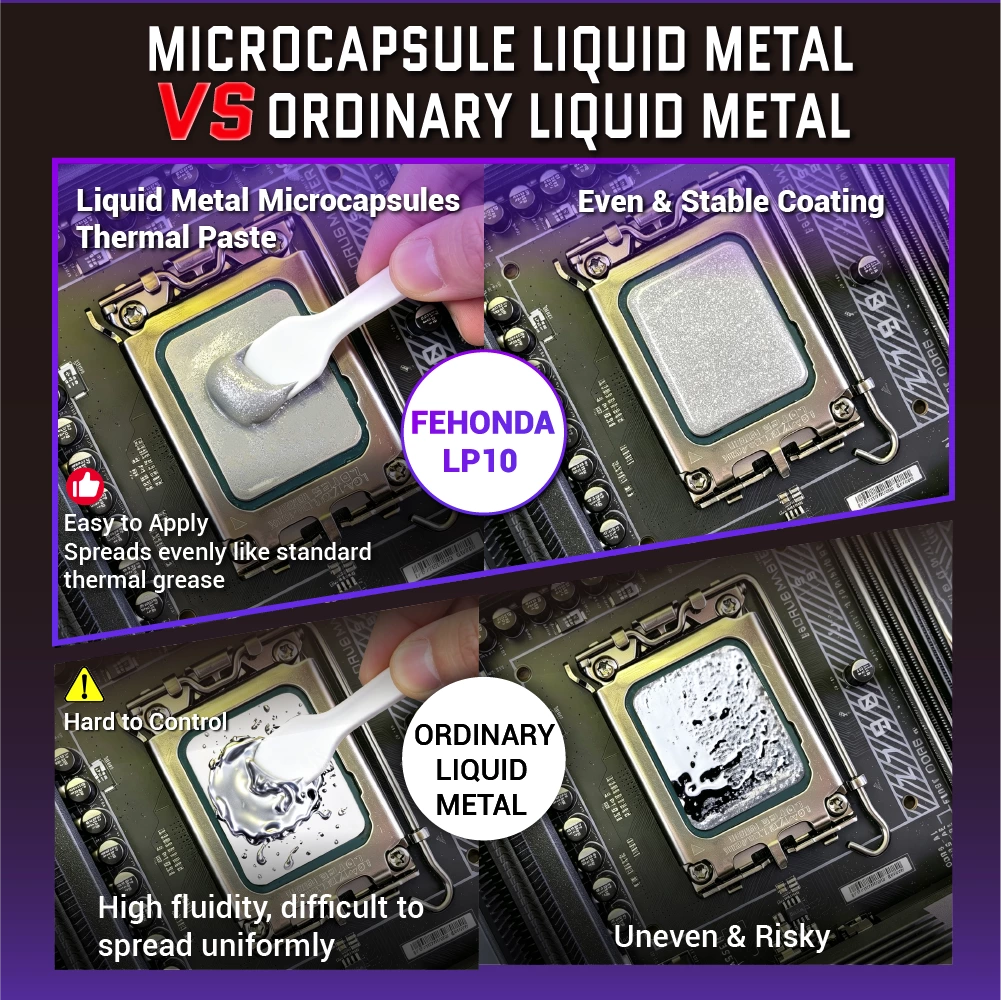
- Non-conductive, no risk of short circuits,NO-corrosion copper
Typical Applications
-
TV, Game Consoles, ETC.
-
Automotive Electronics
-
Memory Devices
-
Consumerelectronics
-
IGBT Module Cooling
-
CPU, GPU Processor And Other Chipsets
FEHONDA | Product Copy — Thermal Interface Materials
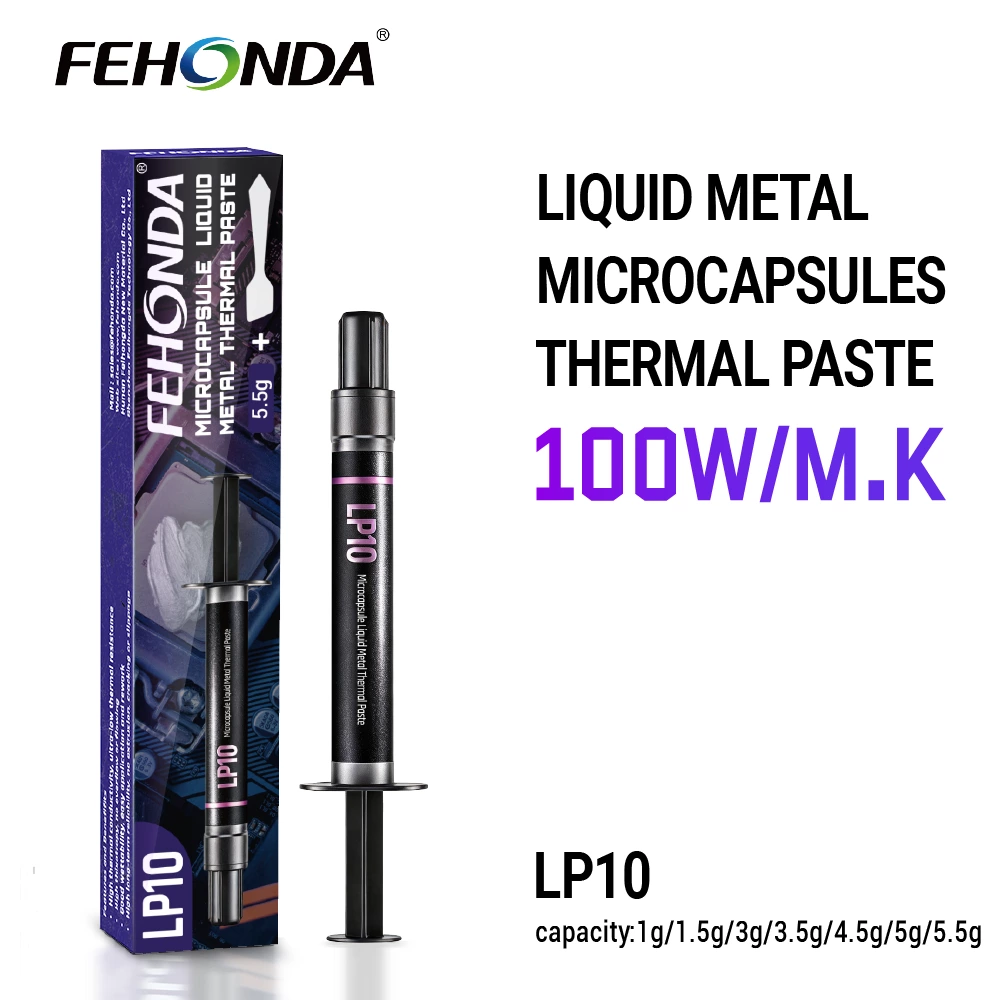
LP10 Microcapsule Liquid Metal Thermal Paste
Liquid metal in a sealed capsule: 0.05 °C·cm²/W at a 20 µm bond line, applied like ordinary paste
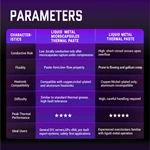
1.Specifications
| Parameters | Unit | Value | Test Standard |
|---|---|---|---|
| Thermal Conductivity | W/m·k | 100w | ASTM D5470 |
| Color | / | Grey | Visual |
| Size | g | 1g / 1.5g / 3g / 3.5g / 4.5g / 5g / 5.5g | / |
| Density | g/cm³ | 6.3 | ASTM D792 |
| Thermal Resistance | ℃in2/w | 0.05 | ASTM D5470 |
| Minimum Thickness | mm | 0.02 | Laboratory |
| Evaporation | % | <0.5% | 24H@150℃ |
| Volume resistivity | Ω。cm | 3200 | ASTM D257 |
| Viscosity | mPa · s | 100(*103 ) | ASTM D2196 |
| Continous Use Temp | ℃ | -20°C / +125°C | Laboratory |
2.Applications
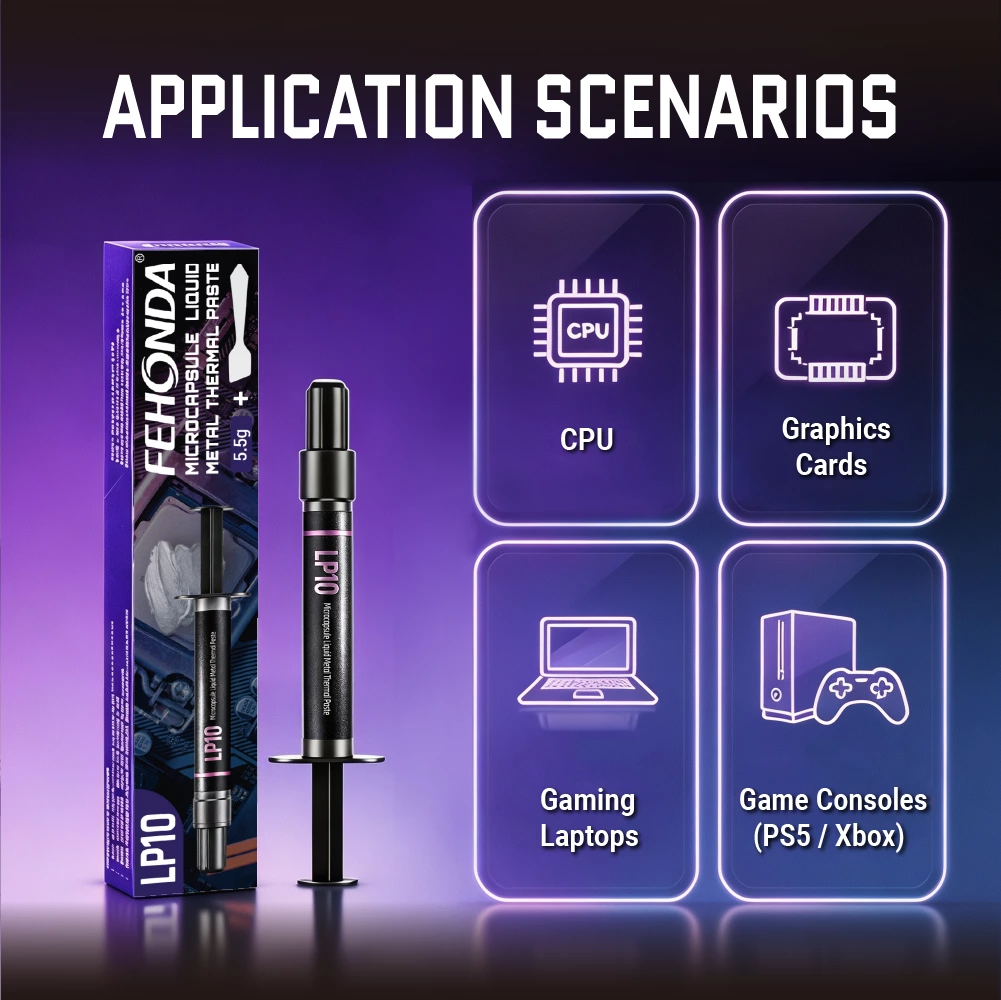
Figure 3. Where LP10 is used.
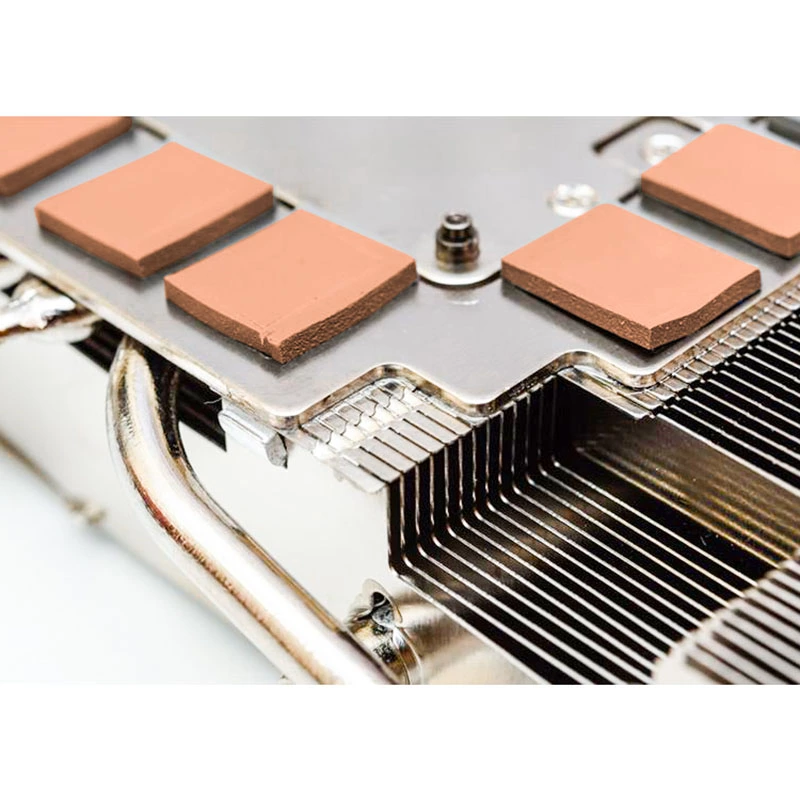
- CPU and GPU chipsets — desktop, workstation and server
- IGBT module heat dissipation — where a thin, stable, low-resistance interface matters under cycling
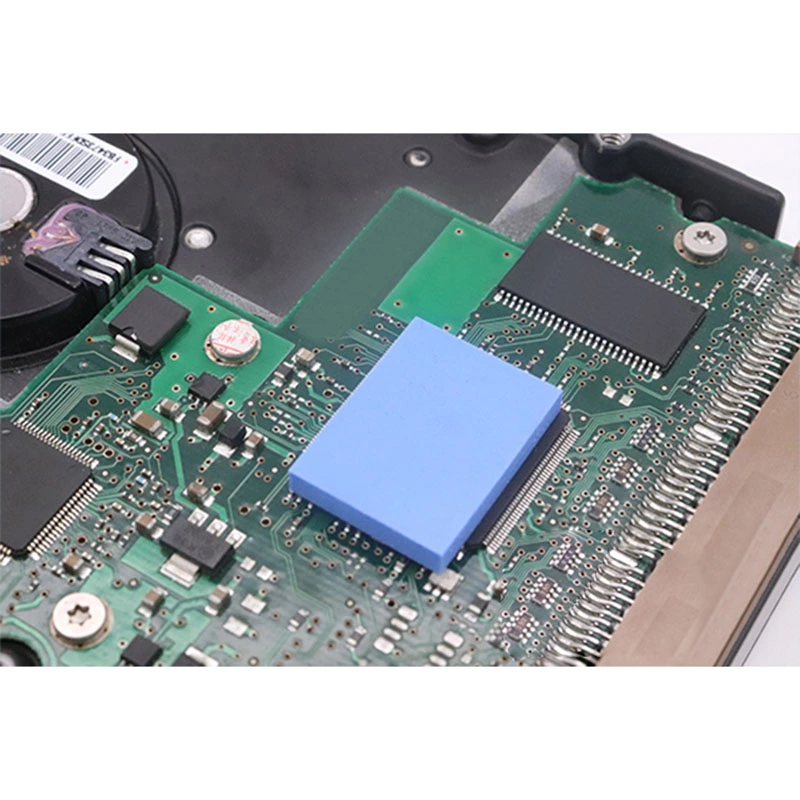
- Memory devices
- Consumer electronics, including smartphones and thin-and-light platforms
- TV and game console hardware
- Automotive electronics
Two notes on fit. The 20 µm minimum bond line means LP10 is for flat, close-tolerance interfaces — it is a TIM1-style material, not a gap filler, and a large or uneven gap wants a gel or pad instead. And the –20 to +125 °C application range is narrower than a general-purpose silicone compound; confirm it covers your worst-case cold start and hot soak.
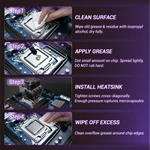
3.How to apply
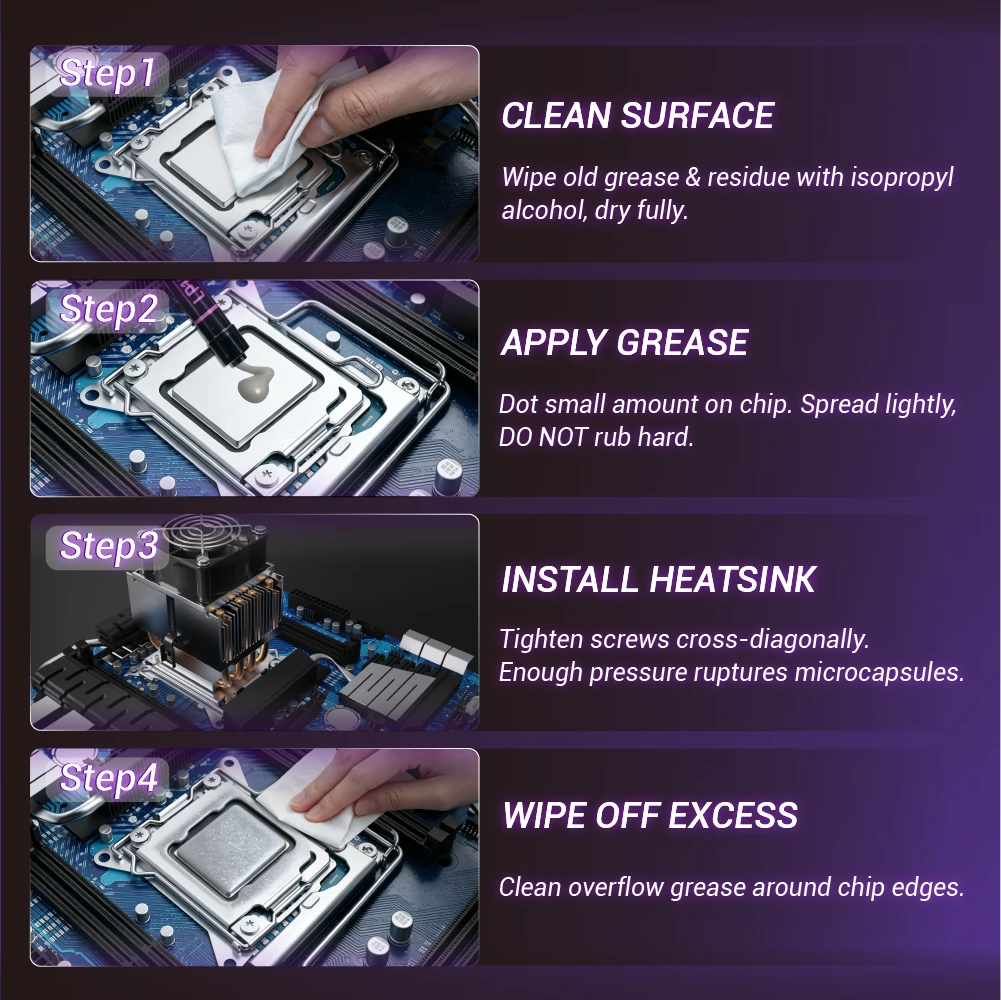
- Clean both surfaces with isopropyl alcohol, 90% or higher, and a lint-free cloth.
- Apply a small amount. Confirm the quantity against your own coverage trials — the target is a thin, even layer at the minimum bond line, not a thick one.
- Spread gently with a spatula. Do not scrub. Scrubbing ruptures capsules away from the interface, which is the one handling error that matters.
- Mount and tighten in a cross pattern so the interface seats evenly and the bond line reaches its target thickness.
- If material escapes the joint, lift it or wipe with a swab and anhydrous ethanol. Do not wipe vigorously.
4..Why FEHONDA
FEHONDA develops and manufactures thermal interface materials, thermally conductive pads, gels, potting compounds, phase-change materials, wave absorbing materials and adhesive materials in-house, with 200+ staff, over 9,000 m² of workshop area and 5,000 tonnes of monthly capacity. Our materials are used in communications, medical, security, power supply, lighting, mobile terminals, automotive electronics and instrumentation.
For a capsule-based material that matters in a specific way. Capsule size distribution, shell integrity and dispersion uniformity are what separate a material that performs repeatably from one that varies batch to batch, and those are process properties rather than formulation properties. We control the process in-house, and we supply the RoHS and REACH declarations with supporting test reports that a channel or OEM review will ask for.
Customisation is available: pack sizes, viscosity for dispensing or screen printing, and private-label and OEM packaging. Send us your application, bond line range and volume and we will return a recommendation, samples and lead time. Please submit your request via our custom service form to ensure a faster response.
5. Frequently asked questions
Is LP10 electrically conductive?
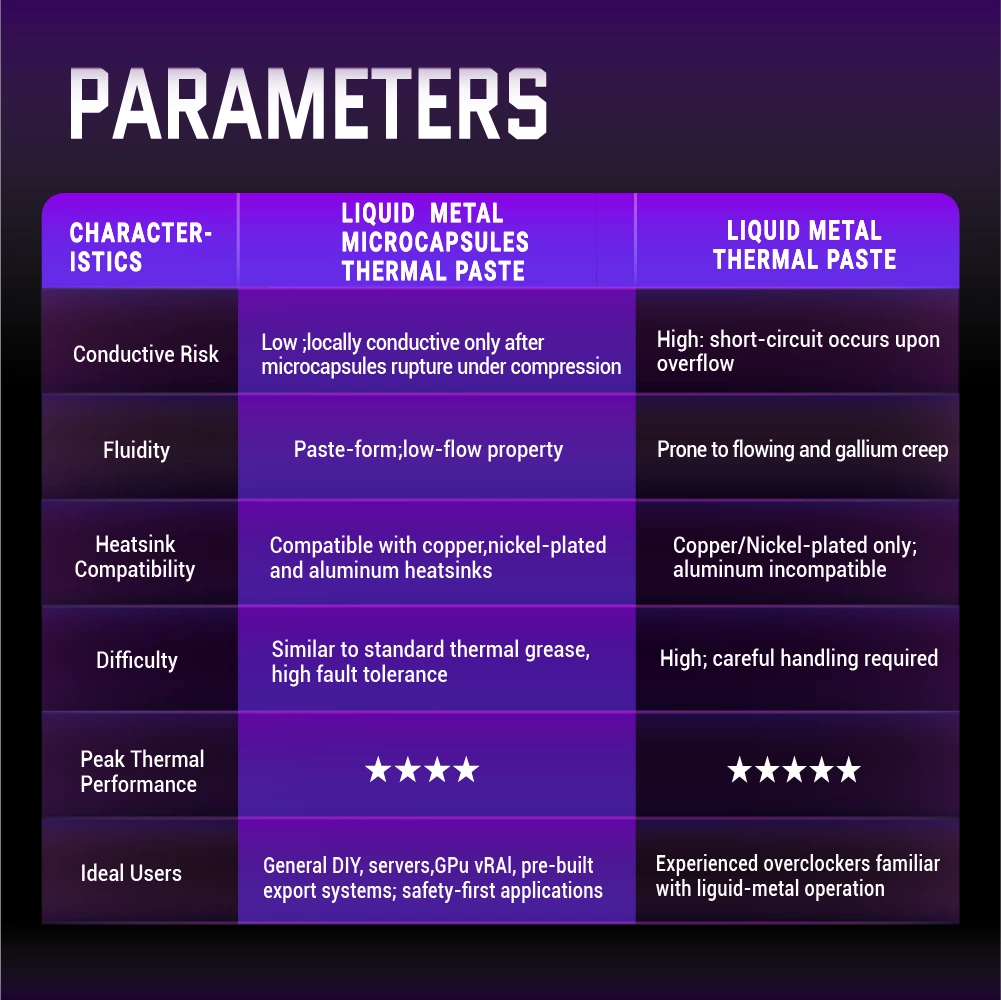
The liquid metal core is conductive; the polymer shell around each droplet is not, and the finished compound measures 3,200 Ω·cm — roughly eight orders of magnitude more resistive than bare liquid metal. That dramatically reduces short-circuit risk, but it is not insulation. Describe it as contained, avoid aggressive scrubbing, and mask surrounding areas where a spill would be serious.
Can I use it with an aluminium heatsink?
Not recommended. The datasheet confirms compatibility with copper; it does not cover aluminium, and gallium attacks aluminium irreversibly through grain-boundary diffusion. Use copper or nickel-plated copper.
Does it pump out or dry out?
No. The compound is highly thixotropic and non-flowing, with no squeeze-out cracking or slipping, and there is no volatile carrier to evaporate. That combination is what makes it usable in vertical and mobile installations where bare liquid metal is not.
What bond line does it need?
Minimum 0.020 mm, or 20 µm. It is intended for flat, close-tolerance interfaces. If your gap is larger or the surfaces are uneven, a thermal gel or pad is the right choice instead.
What is the operating temperature range?
–20 to +125 °C. Confirm this covers your cold-start and hot-soak extremes before specifying, and check the storage range separately.