FEHONDA | Thermal Materials Application Guide
Where a home wallbox actually heats up, which thermal material belongs at each spot, and what to ask for before you buy
1. How much heat, and how it gets out
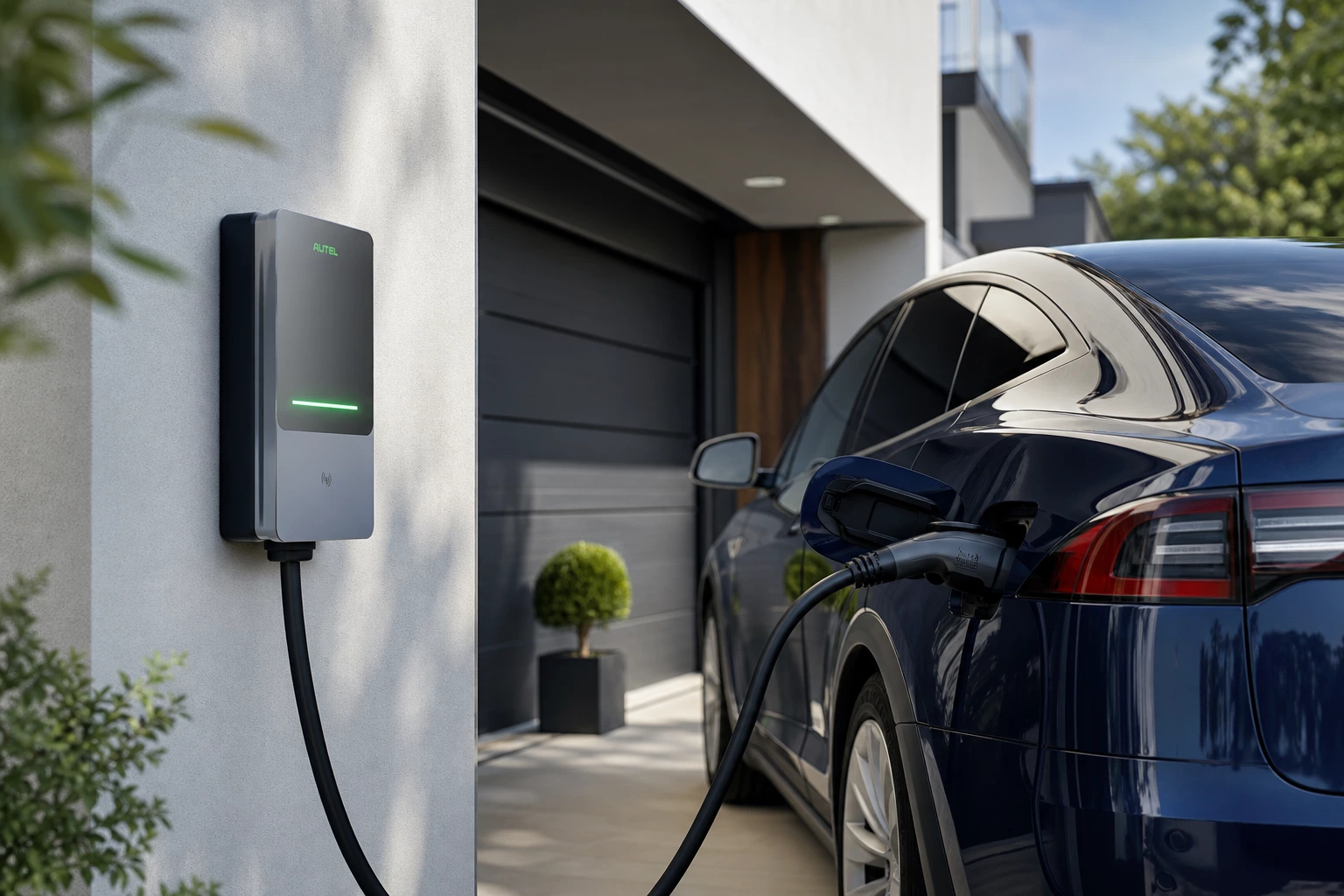
Residential AC charging piles come in a few familiar ratings: 3.5 kW and 7 kW on single phase, and 11 kW or 21 to 22 kW on three phase. The 3.5 and 7 kW units dominate the home market; three-phase 11 and 22 kW units appear in homes with a three-phase supply and in light commercial and workplace installations.
The thermal load is modest. A 7 kW single-phase unit passes 32 A, and the losses that matter are contact and conduction loss in the relay, on-resistance in the switching devices, the auxiliary power supply, and the communication module. Total internal dissipation is small in absolute terms, and the heat flux at any single point is far lower than in a DC power module.
The usual arrangement is that units at 7 kW and below rely on natural convection, while 11 kW and above may add a fan. In practice many 11 and 22 kW units are still designed for natural convection, using a finned or ribbed housing and sometimes an aluminium backplate to spread heat. The engineering preference is strong, and for good reason.
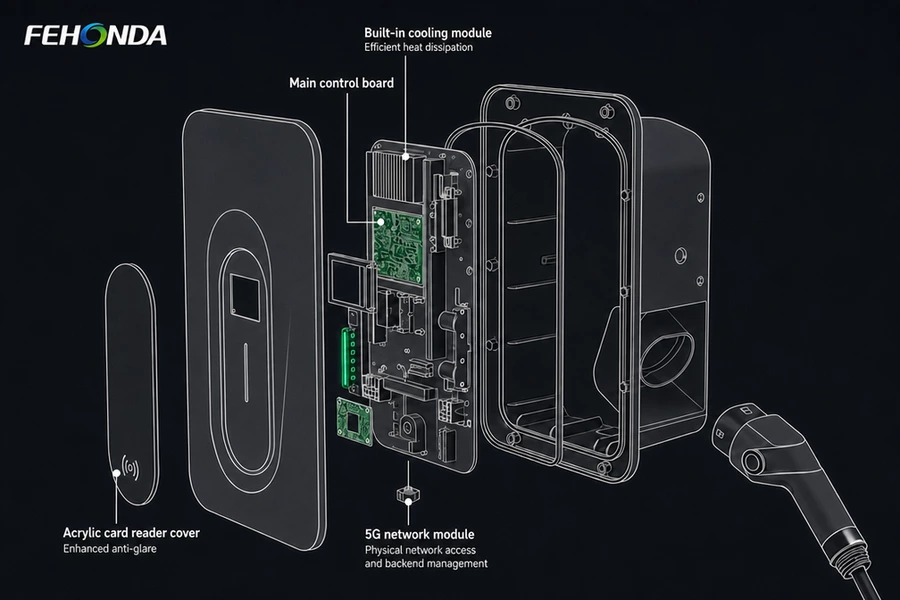
Figure 1. Natural convection versus fan-assisted cooling in a wallbox.
2. The four hot spots
A home wallbox has four places worth attention. None of them is individually severe, and the correct response to all four is modest and targeted rather than heavy-handed.
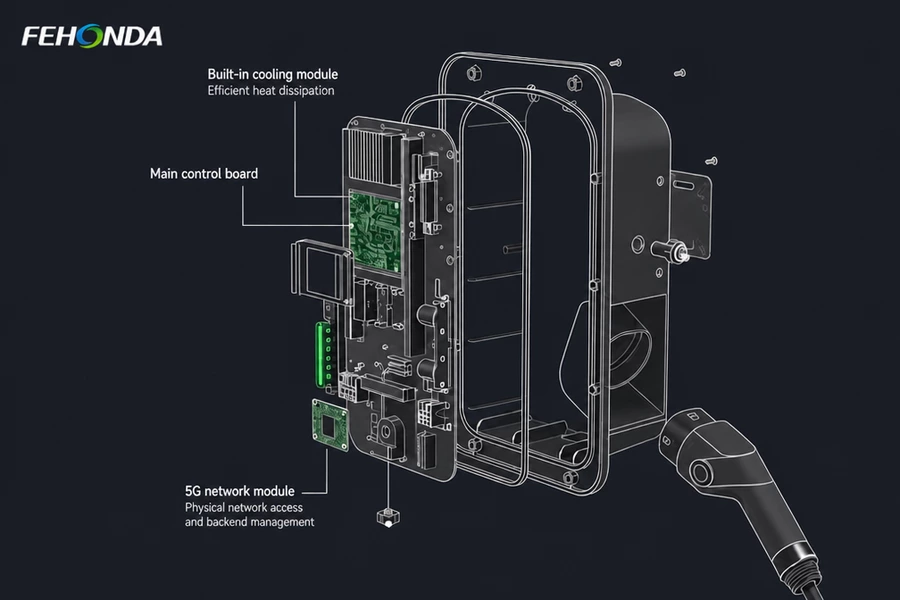
Figure 2. Where a home AC charging pile generates heat.
| Hot spot |
Why it heats |
Thermal character |
Sensible response |
| Control board |
Carries the auxiliary supply, Logic and sensing; heat is distributed rather than concentrated |
Low flux, spread across the board |
Spread heat to the housing wall through a conformable interface; protect the board surface |
| MOSFETs and relay |
Conduction loss in the switching devices, and contact and coil loss in the relay carrying the full charge current |
The relay is often the largest single contributor inside a 7 kW unit |
A heat path to the housing or a small heatsink; the relay also benefits from mechanical retention |
| Small power module |
The auxiliary flyback or buck supply feeding the control electronics |
Steady, moderate, continuous whenever the unit is powered |
A local interface to the housing or a small finned sink |
| Communication chip |
Wi-Fi, Bluetooth, 4G or Ethernet module |
Low dissipation, but thermally sensitive and often mounted near the top of the enclosure where warm air collects |
Usually adequate with board-level spreading; check that it is not sitting in a warm pocket |
Note that the largest single source is often the relay rather than the semiconductors, which surprises people arriving from power electronics. And because total dissipation is low, the temptation is to specify a high-conductivity material everywhere. At these fluxes that buys little — contact and long-term stability matter more than the conductivity figure.
3. Which material, and where
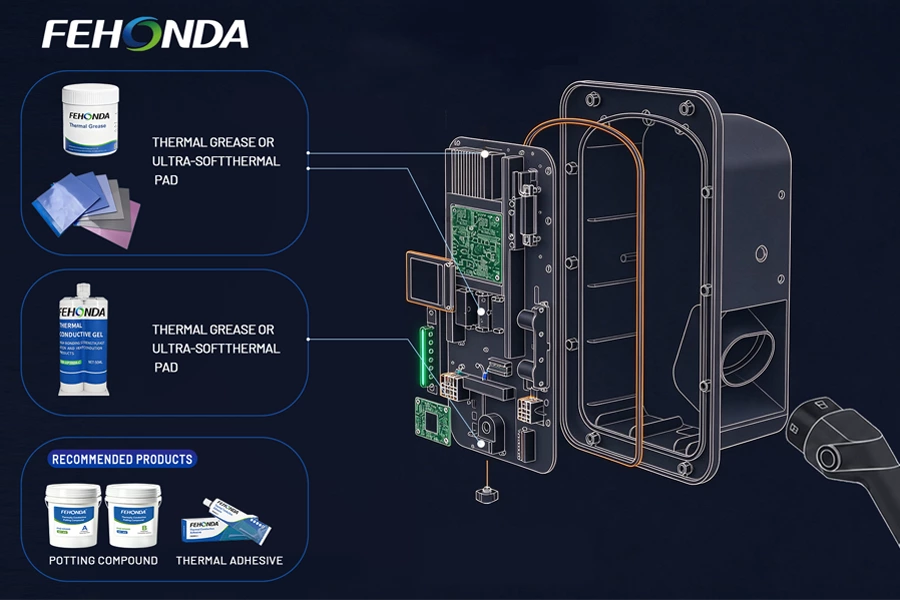
Figure 3. Five material applications inside a home wallbox.
| Material |
Conductivity |
Where it goes |
Why it is the right choice there |
| Thermal grease (thin coat) |
1.5 to 6.0W/(m·K) is sufficient |
Between MOSFETs, small power ICs and a small aluminium heatsink or the housing boss |
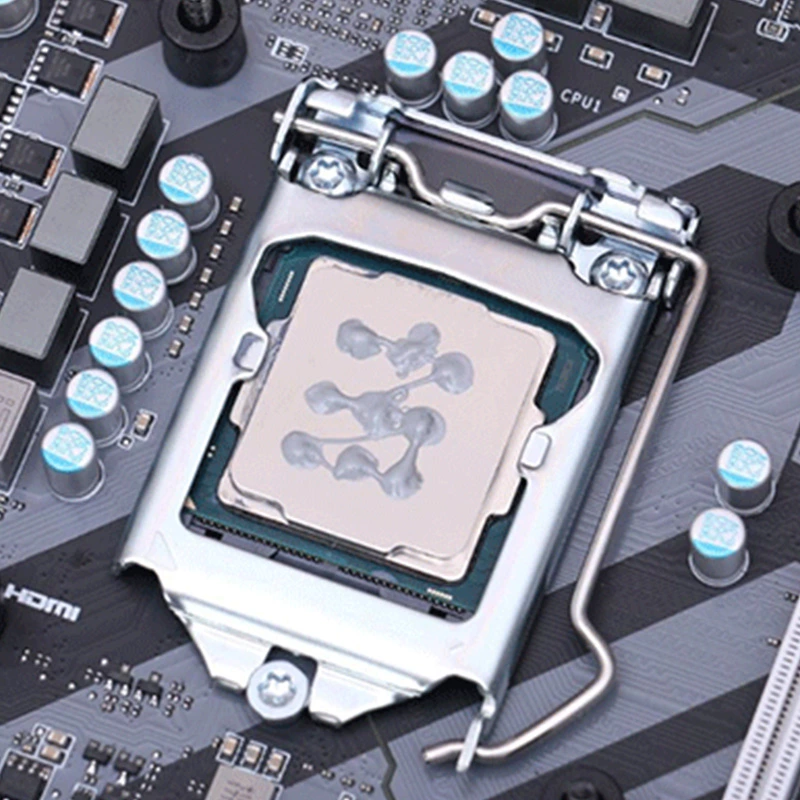
At these power levels a thin grease bond line gives the lowest interface resistance. What matters is not the conductivity figure but that the grease does not dry out, crack or powder over years of thermal cycling |
| Ultra-soft thermal pad |
Around 2.0 W/(m·K) |
Between the power board and the internal cooling ribs or wall of the housing |
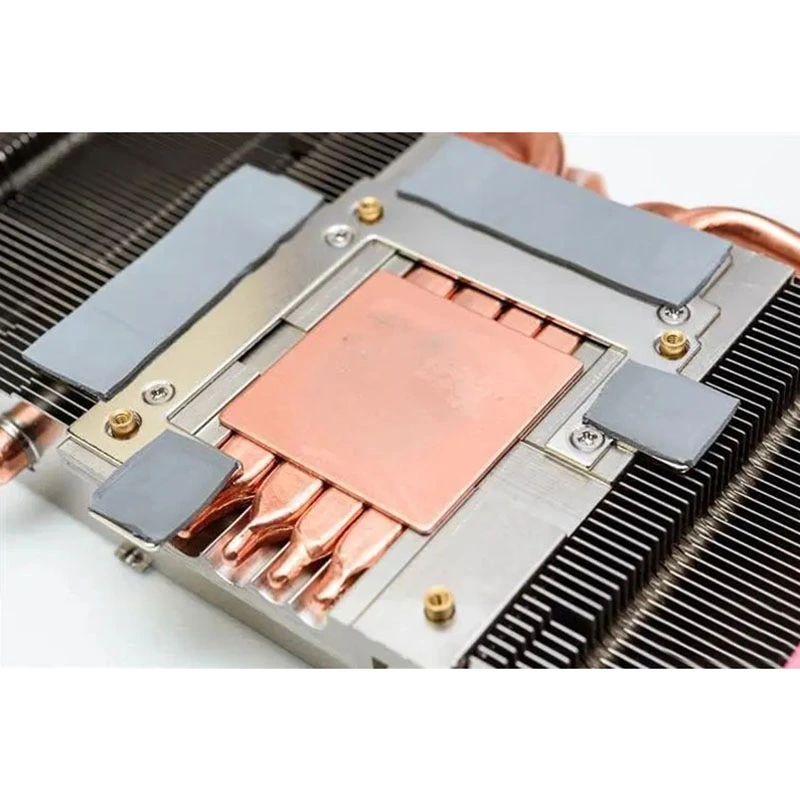
Fills the variable gap to the housing at low compression force, so it bridges the tolerance stack-up without loading the board or its solder joints. Doubles as a cushion against vibration and handling |
| Thermal gel or putty |
3.8 to 8.0 W/(m·K) |
Irregular or odd-shaped gaps, and around components of differing height |
Dispensable, so a small amount fills geometry a pre-cut pad cannot match. Use sparingly and only where the shape demands it |
| RTV thermal sealant |
1.0 to 1.5 W/(m·K), UL94 V-0 |
Housing seams, cable gland entries, and the main control cavity |
Outdoor units need heat transfer and weather sealing in one material. A thermally conductive RTV carries modest heat while sealing against rain and dust, and the flame rating matters in an enclosure that is never opened |
| Two-part potting compound |
0.8 to 2.0 W/(m·K), low viscosity |
Relay cavity and connector terminal cavity, where heat or contamination concentrates |
Insulates and locks the termination against vibration and moisture. Use it locally and deliberately — see the caution below |
A caution worth stating plainly
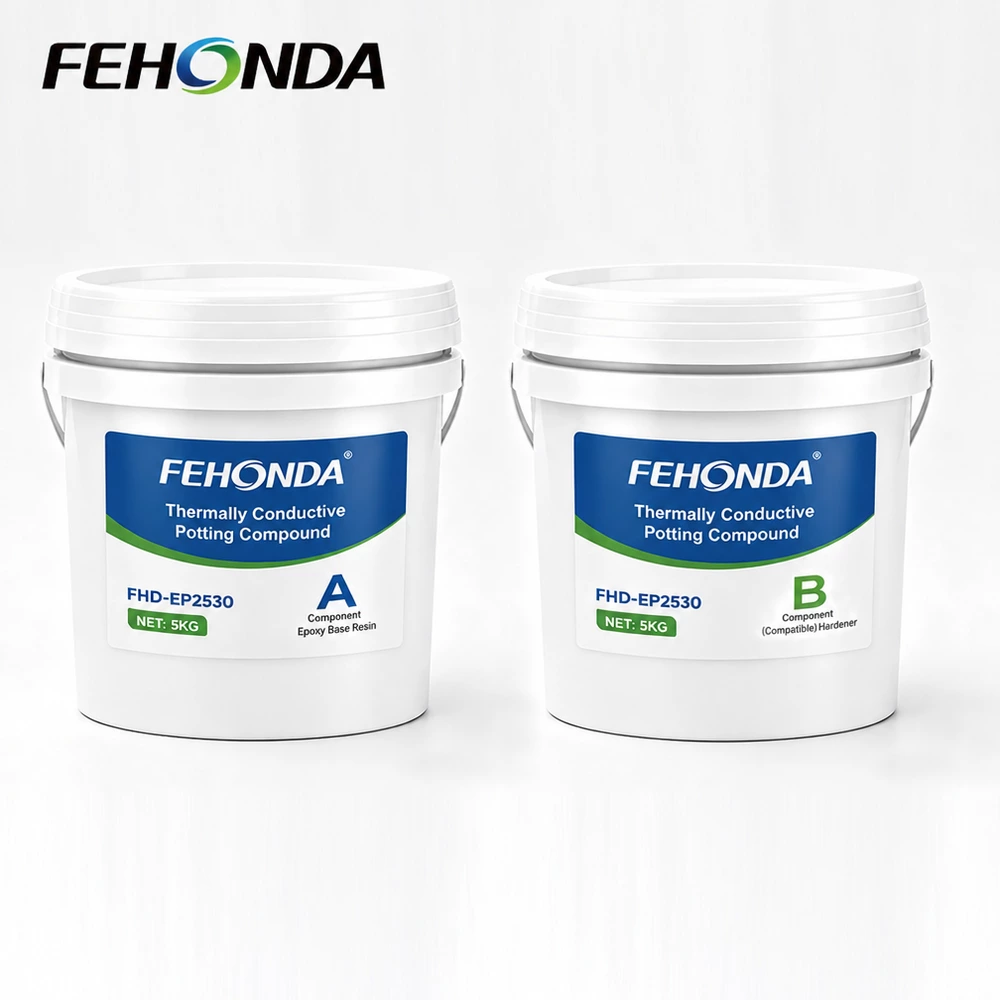
Do not pot a home wallbox in full. A fully potted unit cannot be serviced — a failed relay or communication module cannot be replaced, turning a component failure into a whole-unit return. Local potting of the relay or terminal cavity gives the insulation and retention benefit while leaving the rest openable. This is a case where using less material produces a better product.
4. Why FEHONDA
- Right range, no overselling. 1.5–6.0 W/(m·K) covers all wallbox positions. We won’t push 6.0 for 7 kW boards—softer, conformable grades work better.
- Stability over raw numbers. Sealed fanless enclosures mean years of cycling. Our greases resist bleed/drying/cracking; pads resist compression set. Ask for cycling data, not just conductivity.
- Ultra-soft for board-to-housing. Low-hardness pads bridge gaps at low force, absorbing tolerance stack-up instead of stressing solder joints.
- One supplier for thermal + weather sealing. FEHONDA supplies greases, pads, gels, potting and UL94 V-0 RTV sealants together—compatible by design.
- Customisation & docs. Die-cut parts to drawing, matched thickness/hardness, colour coding, OEM/private-label packaging.
5. Working with FEHONDA
FEHONDA supplies thermal conductive potting adhesive, thermally conductive silica, thermally conductive gel, ultra-soft thermal pads, composite TIM constructions and thermally conductive RTV sealants for residential and light-commercial AC charging piles, with thermal conductivity grades spanning 1.5 to 6.0 W/(m·K).
Our sales and engineering support teams help with grade selection, dispensing and compression trials, sealant selection, compliance documentation, custom die-cutting, OEM packaging and product customisation. Send us your enclosure drawing, the gap range at each position, your target market and production volume, and we will return a shortlist, sample recommendations and lead time. Please submit your request via our custom service form to ensure a faster response.
📩 Contact our technical team: sales@fehonda.com
6. Frequently asked questions
How much heat does a 7 kW home wallbox actually generate?
Far less than a DC charger. Losses come from the relay carrying the full charge current, the switching devices, the auxiliary supply and the communication module. The heat flux at any single point is low, which is why natural convection is usually sufficient and why contact and long-term stability matter more than peak conductivity.
Does my wallbox need a fan?
Units at 7 kW and below generally do not, and many 11 and 22 kW units are also designed for natural convection using a finned housing or an aluminium backplate. A fan adds a wear item, noise, and a dust and moisture path that has to be filtered and maintained. It becomes worthwhile at higher power, in hot climates, or in a very small enclosure.
What conductivity grade do I need for a home wallbox?
Lower than most people assume. Around 1.5 to 3.6 W/(m·K) covers thermal grease on MOSFETs and small power ICs, and around 2.0 W/(m·K) is typical for a board-to-housing pad. Above those levels the extra conductivity rarely changes the result, because at low flux the limiting factor is contact and bond line, not bulk conductivity.
Thermal grease or a pad — which should I use?
Grease where the surfaces are flat and you can hold a thin bond line, such as a MOSFET under a small heatsink. A pad where the gap varies or the surfaces are not flat, such as a board against a ribbed housing wall. Where the shape is irregular, a small amount of gel or putty will reach geometry a pre-cut pad cannot.
How do I waterproof an outdoor wallbox without trapping heat?
Use a thermally conductive RTV sealant rated UL94 V-0 at the housing seams, cable gland entries and control cavity. It seals against rain and dust while still carrying heat, unlike a non-conductive sealant that insulates the joint.
Should I pot the whole unit?
No. Local potting of the relay cavity or terminal cavity gives insulation, retention and moisture protection where it is needed, while leaving the rest serviceable. A fully potted wallbox cannot be repaired in the field, turning a component failure into a whole-unit return.
What should I ask a supplier for?
Cycling or ageing data rather than a single conductivity figure, plus continuous operating temperature range. For outdoor units add dielectric strength and the UL94 rating with its certified thickness; for European markets, RoHS and REACH declarations with supporting test reports.