When heat generated by a chip, IGBT module, or battery cell must travel through multiple layers to reach a heatsink, the Thermal Interface Material (TIM) layer determines whether your device runs cool—or fails prematurely. Yet many engineers still treat TIM selection as an afterthought, only to discover that the wrong choice adds 2–5× thermal resistance after a few thermal cycles.
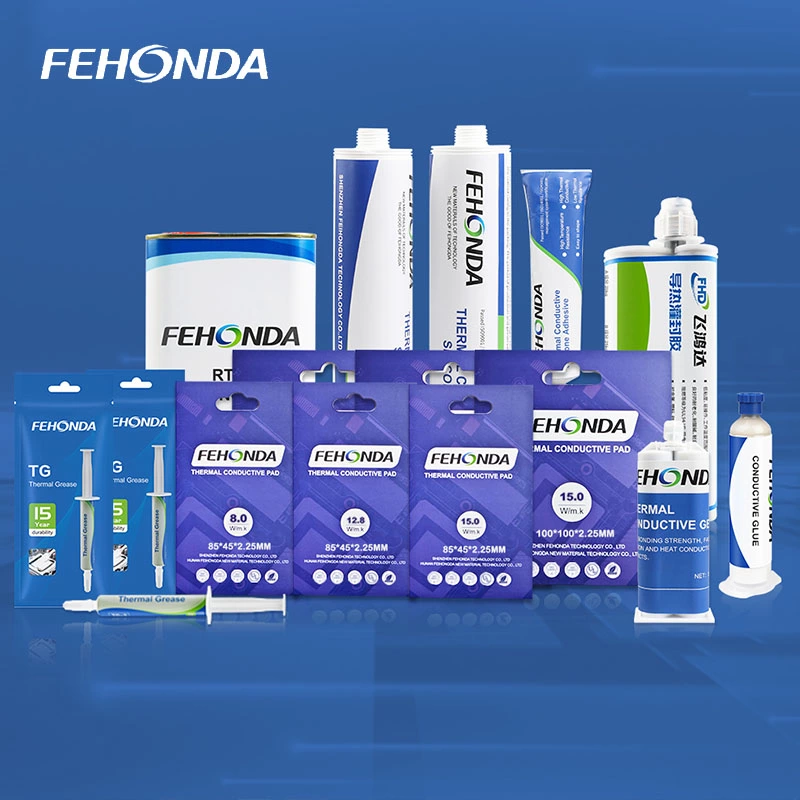
How To Choose The Right Thermal Interface Material (tim) For Your Application
This guide breaks down the four mainstream TIM families—silicone thermal pads, thermal greases, phase change materials, and electrically insulating thermal materials—and gives you a practical framework to select the right one.
The 4 Critical Parameters Before You Choose
Before comparing products, lock down these four numbers from your design:
Gap distance between the heat source and heatsink (typically 0.05–5.0 mm)
Target thermal resistance (℃·in²/W) — more important than thermal conductivity
Electrical insulation requirement (dielectric strength, kV/mm)
Assembly method: manual placement, automated dispensing, or screw-fastened pressure

1. Silicone Thermal Pads — The Versatile Workhorse
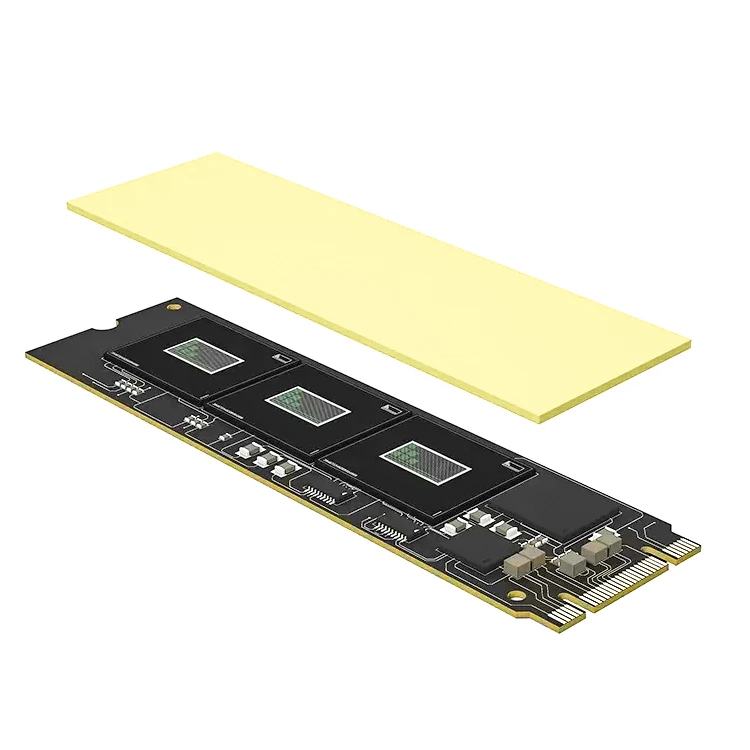
Silicone pads are composite materials of silicone rubber and thermally conductive fillers (alumina, aluminum nitride, boron nitride). They typically offer:
Thermal conductivity: 1–12 W/m·K
Operating temperature: −40 to 200℃
Dielectric strength: >5 kV/mm
Lifespan: 10+ years under normal conditions
Best for: Gaps of 0.2–3.0 mm, applications requiring electrical insulation, and designs needing vibration damping or repeatable disassembly. Typical uses include automotive electronics, EV battery modules, power supplies, LED lighting, and 5G base stations.
Not ideal for: Gaps below 0.2 mm where thermal resistance becomes too high, or ultra-high heat flux density scenarios.
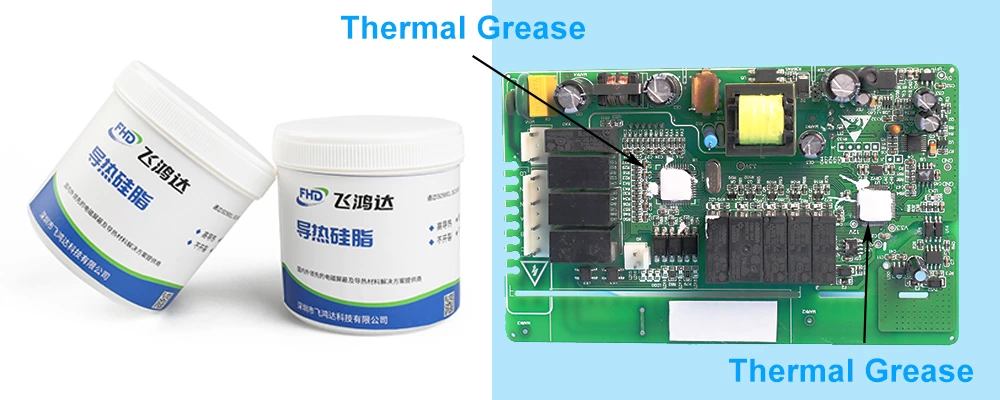
2. Thermal Grease (Paste) — Lowest Thermal Resistance, Highest Maintenance
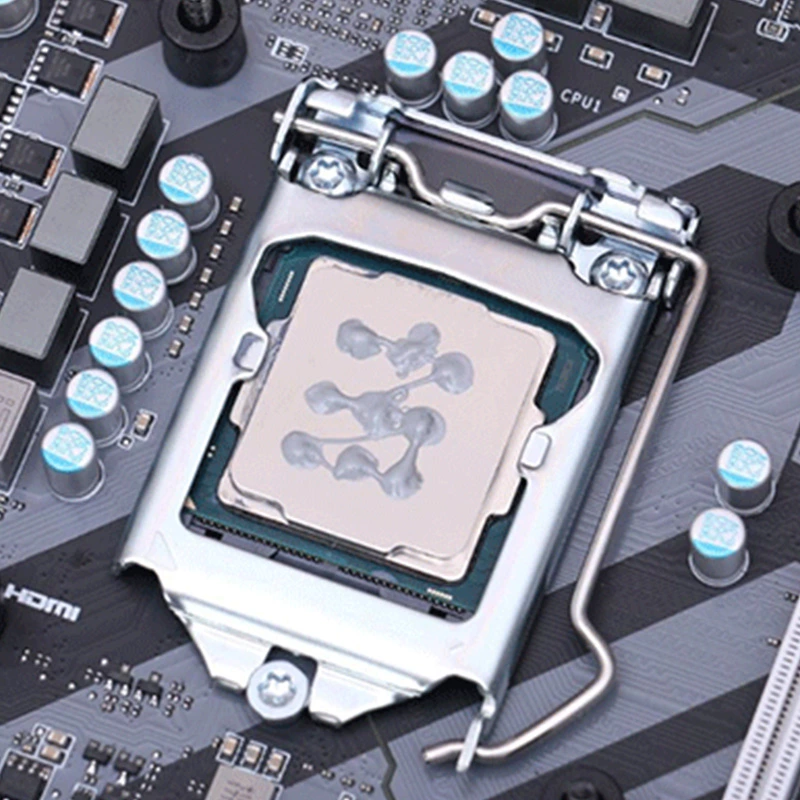
Thermal grease delivers the lowest interfacial thermal resistance when applied in a thin layer (<0.1 mm). Typical specs:
Thermal conductivity: 1–8+ W/m·K
Minimum bond line: 0.01–0.05 mm
Best for: High-power IGBT modules, CPU/GPU interfaces, and applications where assembly pressure can be precisely controlled.
Watch out: Grease suffers from pump-out effect—under thermal cycling, the silicone oil bleeds out, and the dried interface can see thermal resistance increase by 2–5×. Service life is typically around 1 year under sustained pressure and heat. Proper application (thin, even layer) is critical: applying it too thick actually makes your component hotter.
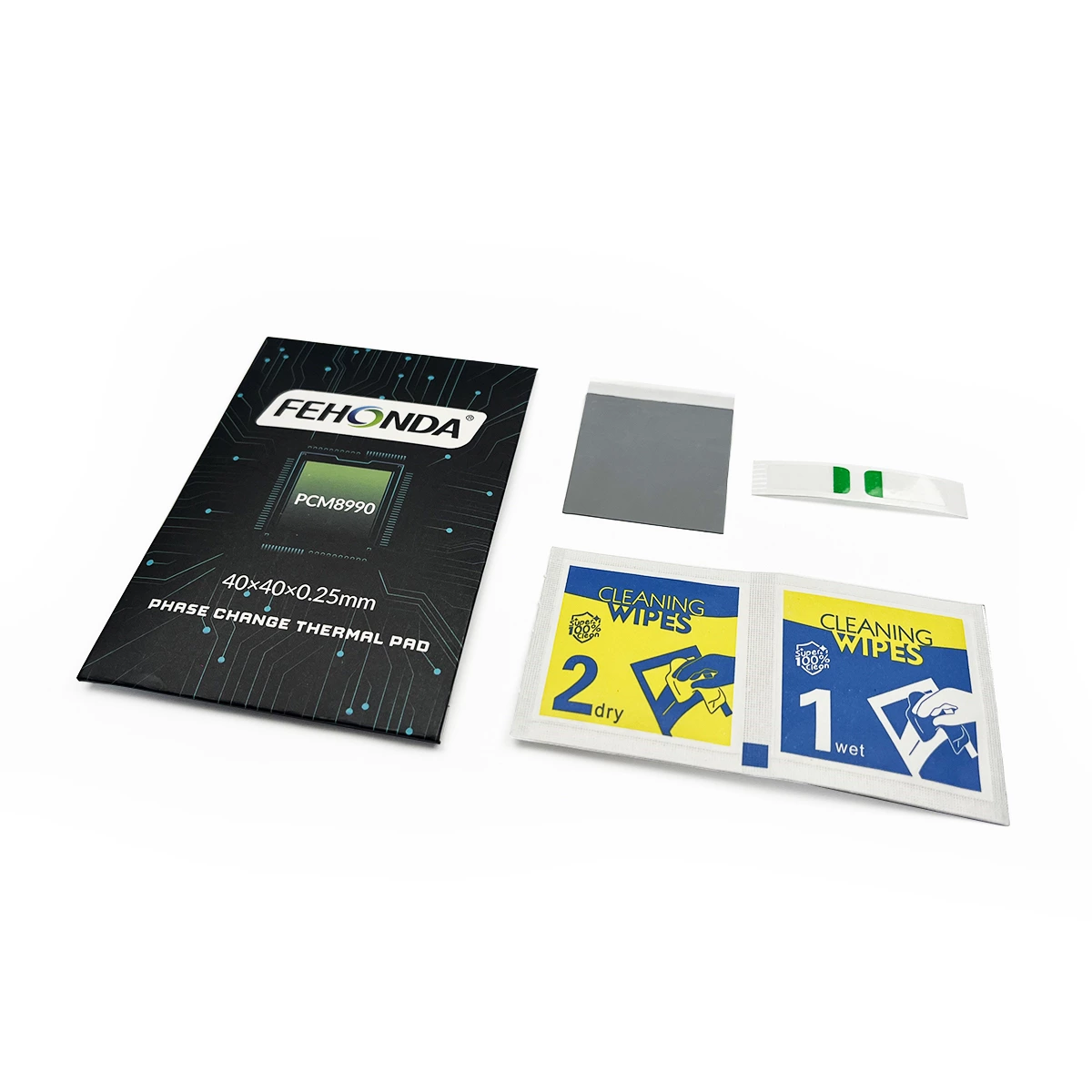
3. Phase Change Materials (PCM) — The Emerging Standard for High-Reliability Designs
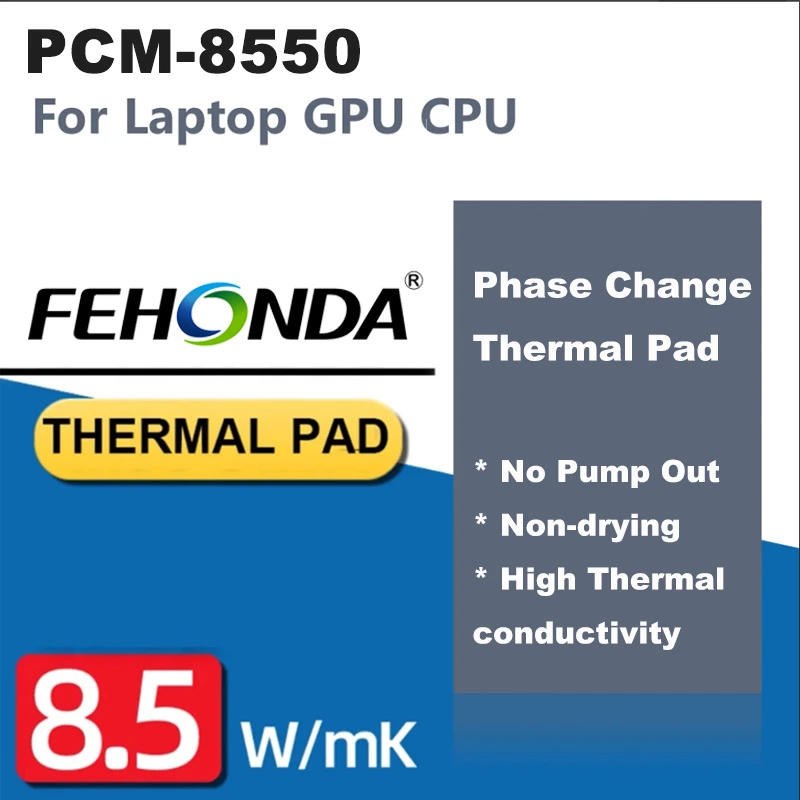
PCM stays solid at room temperature (easy to handle and pre-cut) but softens and flows at its activation temperature (typically 45–55℃), wetting the interface and driving out air.
Thermal conductivity: 3–8 W/m·K
Thermal resistance: 0.005–0.035 ℃·in²/W (among the lowest of any TIM)
Operating temperature: −45 to 125℃
Best for: EV traction inverters, energy storage IGBT modules, AI servers, and any application with high heat flux density and stringent reliability requirements. PCM combines the low thermal resistance of grease with the clean Installation of pads—without the pump-out problem.
Considerations: Higher cost, and storage/handling conditions require more care.
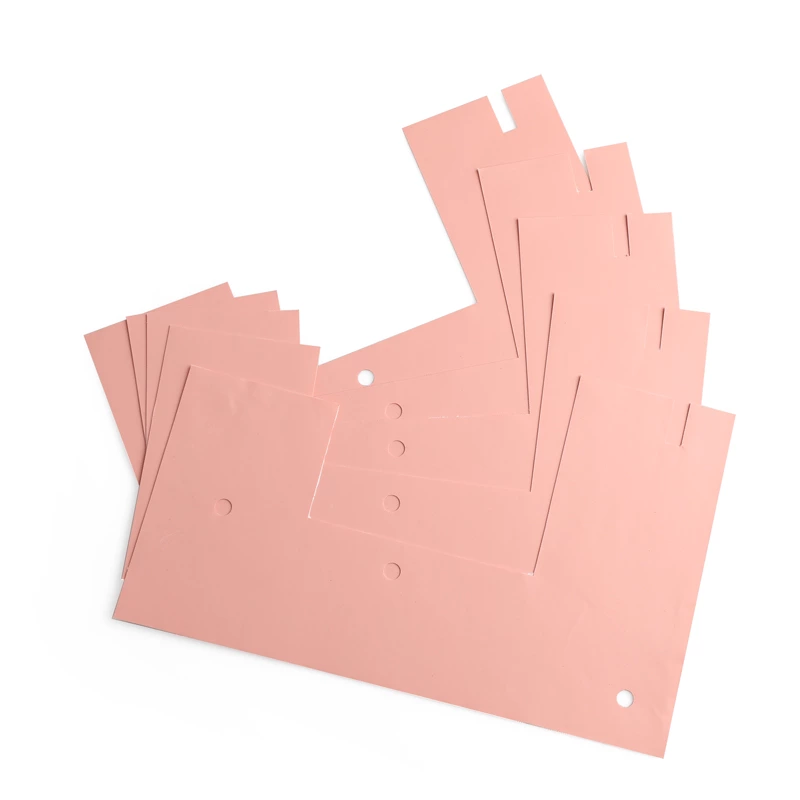
4. Electrically Insulating Thermal Materials — When Voltage Isolation Matters
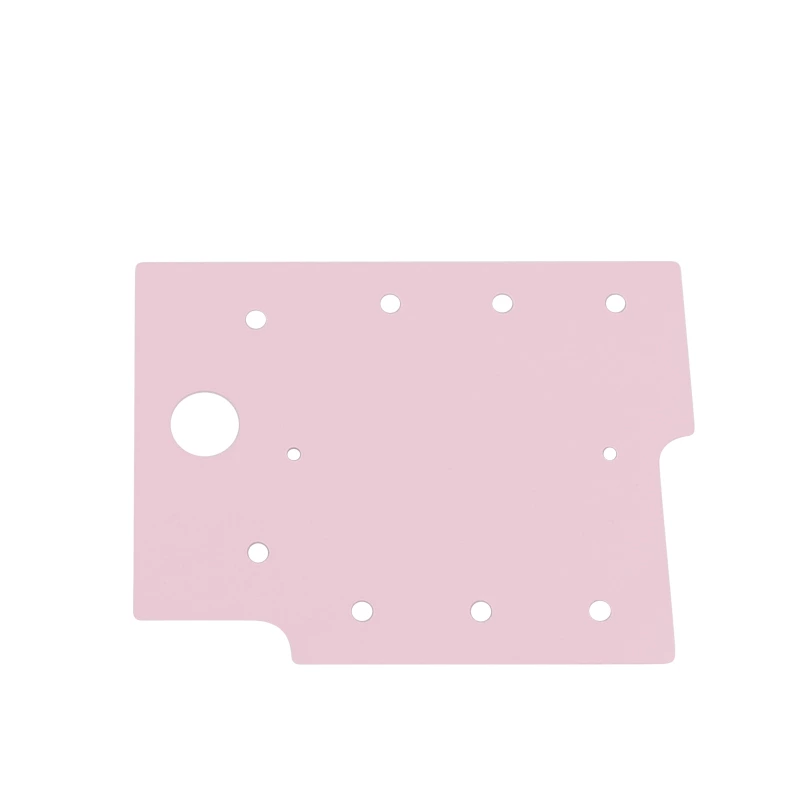
These materials combine high thermal conductivity with high dielectric strength, typically using silicone substrate compounded with ceramic fillers and glass fiber reinforcement.
Thermal conductivity: 1.0–5.0 W/m·K
Breakdown voltage: ≥5 kV
Operating temperature: −50 to 200℃
Best for: Switch-mode power supplies, charging piles, inverters, BMS high-low voltage isolation, and IGBT modules where electrical isolation between the semiconductor and heatsink is mandatory.
Decision Matrix
| Your Priority | Recommended TIM | Typical Gap |
| Lowest thermal resistance, easy maintenance | Thermal Grease | <0.1 mm |
| Insulation + cushioning + repeatable assembly | Silicone Thermal Pad | 0.2–3.0 mm |
| Ultra-low thermal resistance + long-term stability | Phase Change Material | 0.05–0.5 mm |
| High-voltage isolation + heat transfer | Insulating Thermal Material | 0.5–3.0 mm |
Contact Customer Service: (Available)
Silicone Thermal Pads — (TDS)
Thermal Paste — (TDS)
Phase Change Materials (PCM) — (TDS)
Electrically Insulating Thermal Materials — (TDS)
Conclusion: Match the Material to the Physics, Not the Catalog
Selecting TIM is not about picking the highest W/m·K number. It's about matching thermal resistance, gap geometry, electrical requirements, and assembly method to your specific design. A 3 W/m·K phase change material often outperforms a 12 W/m·K grease in real-world reliability.
When evaluating suppliers, look beyond the spec sheet: request sample datasheets, verify third-party test reports, and confirm the supplier has a documented change notification process. In thermal management, the difference between "good enough" and "right" is measured in years of field reliability.